Comparative Evaluation of Commercially available different Candies on Salivary pH among Young Adults- A Randomised Control Trial.
Comparative Evaluation of Commercially available different Candies on Salivary pH among Young Adults- A Randomised Control Trial.
Dr. Snehal Chintale 1*, Dr. Arun Dodamani2, Dr. Ashwini Zadode3, Dr. Sharvari Tadas4, Dr. Sujata Chhabile5
1,4,5. Post Graduate, Department of public health Dentistry, Jawahar Medical Foundation's Annasaheb Chudaman Patil Memorial Dental College, Dhule, INDIA.
2. HOD and Professor, Department of public health Dentistry, Jawahar Medical Foundation's Annasaheb Chudaman Patil Memorial Dental College, Dhule, INDIA.
3. Post Graduate, Department of Periodontics, Jawahar Medical Foundation's Annasaheb Chudaman Patil Memorial Dental College, Dhule, INDIA.
*Correspondence to: Dr. Snehal Chintale, Post Graduate, Department of public health Dentistry, Jawahar Medical Foundation's Annasaheb Chudaman Patil Memorial Dental College, Dhule, INDIA.
Copyright.
© 2025 Dr. Snehal Chintale This is an open access article distributed under the Creative Commons Attribution License, which permits unrestricted use, distribution, and reproduction in any medium, provided the original work is properly cited.
Received: 27 June 2025
Published: 01 Sep 2025
DOI: https://doi.org/10.5281/zenodo.17075151
ABSTRACT
Introduction Diet refers to the total amount of food consumed by individuals. Oral health has often been viewed in isolation from the general health. In earlier times, dental care was mainly directed toward repairing damage caused by oral diseases.". This study is the aims of assessing the effect of selected available beverages on salivary pH amongst young adults.
Materials and Method- This clinical trial included 25 participants, divided into five distinct groups. The test candies consisted of sugary candies, Hajmola candies, coffee candies, imli candies, and Aawala candies. Statistical analysis was conducted using SPSS, employing descriptive statistics, one-way ANOVA, and post hoc Tukey’s test.
Results- After the consumption of candies across all the group, there was an immediate decrease in the salivary Ph followed by it was increases at 10 and 30 minutes interval. It was shown that salivary pH decrease for all the beverages immediately after consumption.
Conclusion- This study is to find out that candies will clears rapidly from the oral cavity, and also address the future complication and to increase the awareness among the young adults. they have a significant cariogenic and erosive potential. Hence, it is always advised to minimise the consumption of candies, especially amongst children and young adults to maintain a good oral health.
Keywords- Dental caries, sugary beverages, salivary pH, cariogenic, candy.
Comparative Evaluation of Commercially available different Candies on Salivary pH among Young Adults- A Randomised Control Trial.
Introduction
Health can be viewed as the presence or absence of disease or medically measured risk factors in an individual. However, more broadly, health is ‘a state of complete physical, mental and social well-being and not merely the absence of disease or infirmity’ (WHO 1946). In the context of health, integrity signifies honesty, ethical conduct, and adherence to strong moral principles by individuals and organizations involved in healthcare delivery and research. (1)
Oral health is the state of the mouth, teeth and orofacial structures that enables individuals to perform essential functions such as eating, breathing and speaking, and encompasses psychosocial dimensions such as self-confidence, well-being and the ability to socialize and work without pain, discomfort and embarrassment. Oral health conditions are largely preventable and can be treated in their early stages. Most cases are dental caries (tooth decay), periodontal diseases, tooth loss and oral cancers. Other oral conditions of public health importance are orofacial clefts, noma (severe gangrenous disease starting in the mouth mostly affecting children) and oro-dental trauma.[2]
The WHO Global Oral Health status Report (2022) estimated that oral diseases affect close to 3.5 billion people worldwide, with 3 out of 4 people affected living in middle-income countries. Globally, an estimated 2 billion people suffer from caries of permanent teeth and 514 million children suffer from caries of primary teeth. Prevalence of the main oral diseases continues to increase globally with growing urbanization and changes in living conditions.
Oral health has traditionally been considered separate from overall health, with dental professionals primarily concentrating on treating oral diseases. However, contemporary dentistry now prioritizes disease prevention and acknowledges the critical connection between the health of the teeth and oral tissues and the body's overall well-being.[2] Diet plays a significant role in the development of dental caries and enamel erosion. A person's nutritional health affects both the formation of teeth and their ability to resist various oral conditions, such as periodontal disease and oral cancer.[3] Saliva is crucial for maintaining oral health and serves as a key diagnostic biofluid. It plays an important role in protecting and lubricating oral tissues, aiding in the remineralization of teeth, and assisting with digestion.[4] The unique composition of saliva provides it with various physical and biochemical properties, making it valuable for diagnosing, predicting, and managing both oral and systemic conditions.[5] Human saliva is made up of 99% water, along with glycoproteins, mucous epithelial cells, and enzymes like amylase and lipase (Carpenter, 2013).[6] pH, which measures the acidity or alkalinity of a solution, indicates the concentration of hydrogen ions in that solution. A solution with a high concentration of hydrogen ions has a low pH, while one with fewer hydrogen ions has a high pH. The pH of saliva plays a crucial role in the balance between the acidic demineralization of teeth and the remineralization of early caries lesions.[7] After consuming fermentable carbohydrates, especially sugars, bacteria in the plaque produce acids that lower the pH. Conversely, the pH rises when these acids are neutralized or washed away by saliva, which contains bicarbonate, an important buffer (Dawes et al., 2015).[4] As the sucrose content rises, salivary fermentation intensifies, leading to increased microbial acidity and a higher risk of enamel dissolution and potential caries formation.[8] Biscuits, soft drinks, and breakfast cereals are among the most common sources of dietary sugars.[5] Saliva typically has a pH between 6.7 and 7.4, but bacterial breakdown of carbohydrates produces lactic, butyric, and aspartic acids, lowering the pH. When the pH in the mouth drops below the critical threshold of 5.5, these acids start eroding tooth enamel. Prolonged exposure to low salivary pH increases the risk of developing dental caries.[9] Dental caries, despite being largely preventable, continues to be the most widespread chronic disease affecting both children and adults. [10].Individuals aged 15 to 28 are particularly vulnerable. In today's era, the frequent consumption of junk food and snacking between meals is notably common among younger individuals and their peers [2] Therefore, this study was conducted to evaluate the impact of selected locally available candies on salivary pH in young adults.
Materials and Method
The study was a randomised, double blind, controlled, parallel group design clinical trial. Conducted at department of Public health dentistry at the dental college. Prior to the start of the study, the study protocol was approved by the institutional ethical committee. (/EC/NEW/INST/2022/2959/2022/081). A total of 25 undergraduate students, randomly selected from the dental college were examined and selected.19 All study participants shared similarities in age, oral hygiene practices, and other lifestyle factors that could significantly influence the study outcomes. Prior to the start of the study, each participant was informed about purpose of the study. Consent was obtained from all subjects after providing a detailed explanation. The subjects were chosen based on specific criteria, including: being 15 to 28 years old, having a DMFT score of zero (indicating they were caries-free), and being free from any systemic disease or illness. The subjects consumed a single candy, and stimulated saliva samples were collected at predetermined intervals: (i) immediately after consumption, (ii) 5 minutes post-consumption, (iii) 10 minutes post-consumption, and (iv) 15 minutes post-consumption. The study participants consumed four different candies on seperate days, with salivary samples collected accordingly. The participants divided into five groups, sugary candies, Hajmola candies, coffee candies, imli candies, Aawala candies. The intrinsic pH of each beverage was measured prior to the study.
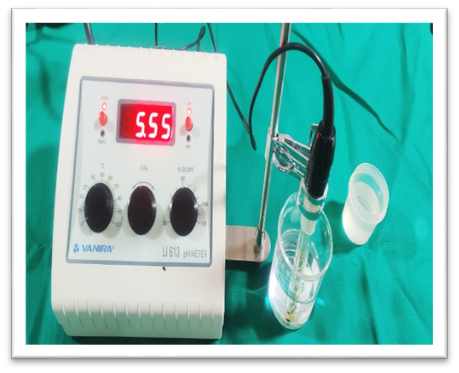
Figure 1. Vanira LI 613 digital pH meter
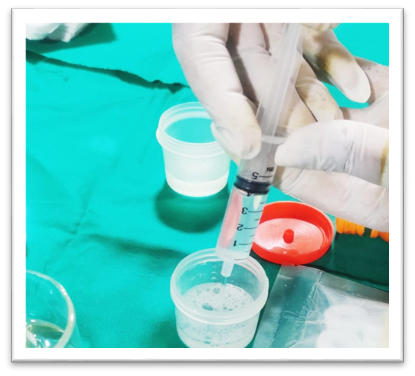
Figure 2. Saliva with distilled water
Unstimulated saliva samples were collected with participants seated comfortably on a standard chair. Samples were obtained at baseline and at each time point after beverage consumption for up to one minute. Salivary pH was measured directly using Vanira LI613 digital pH meter. The meter's accuracy was regularly verified to ensure reliable readings. A pH-sensitive glass combination electrode was immersed in the collected saliva sample. The digital reading was monitored until it stabilized, and the pH value was then recorded. Between measurements, the electrode was rinsed thoroughly with distilled water and immersed in a standard pH 7 solution to maintain stability and monitor potential drift. Saliva pH was assessed promptly, within 10 minutes of sample collection. A ???? value of ≤0.05 was considered significant for all statistical analyse.
Sample collection. A ???? value of ≤0.05 was considered significant for all statistical analyse.
Results
Table 1. Comparison of change in salivary pH within each group
|
Group |
Before |
5mins |
15mins |
30mins |
p-value |
||||
|
Mean |
SD |
Mean |
SD |
Mean |
SD |
Mean |
SD |
||
|
Group 1 |
| ||||||||