Comparative Demonstration of the Acaricidal Effects of Heat and Ivermectin %1 on Demodex Folliculorum using in Vitro Camera Microscopy
Comparative Demonstration of the Acaricidal Effects of Heat and Ivermectin %1 on Demodex Folliculorum using in Vitro Camera Microscopy
Goktug Demirci*
*Correspondence to: Goktug Demirci, MD, Professor of ophthalmology. Department of Ophthalmology, Istanbul Medipol University, Istanbul, Turkey.
Copyright
© 2023 Goktug Demirci . This is an open access article distributed under the Creative Commons Attribution License, which permits unrestricted use, distribution, and reproduction in any medium, provided the original work is properly cited.
Received: 26 September 2023
Published: 30 September 2023
DOI:https://doi.org/10.5281/zenodo.8419883
Abstract
Purpose: This study aimed to investigate, compare, and demonstrate the acaricidal effects of heat and %1 ivermectin on Demodex Folliculorum. The results provide insights into the feasibility of thermal interventions and %1 ivermectin as acaricidals.
Methods: Through in vitro experiments with digital microscope, we evaluated the impact of heat and %1 ivermectin on epilated eyelashes with Demodex Folliculorum.
Results: As the temperature increased from the initial room temperature of 22.5°C, podosome movements increased when the temperature reached 45°C and was maintained for 5 min, mite movements began to slow down, accompanied by contractive movements. After 2 h, we observed only the empty shriveled cytoskeleton of Demodex under a digital microscope. In the second patient, eyelashes were treated with 1% ivermectin solution in immersion oil. After 10 min, saponification of the oil inside Demodex and eyelashes was observed. Within 30 min, no podosome movement was observed. Based on our observations, the acaricidal effect of heat was gradual, resulting in the complete emptying of Demodex contents into the environment after 2-4 hours. In contrast, the acaricidal effect of ivermectin was rapid, predictable, and more selective when observed under a live observation microscope.
Conclusions: Based on our findings, both heat therapies, particularly those exceeding 45°C, and drug therapies such as 1% ivermectin, demonstrated acaricidal effects. However, these two approaches differ in terms of speed, mechanism, side effects, cost, and availability. This collaborative approach will ensure a comprehensive evaluation of the patient's condition and the selection of the most appropriate and effective treatment strategy.
Key words: Demodex, Eye, Heat, Ivermectin, Parasites.
Comparative Demonstration of the Acaricidal Effects of Heat and Ivermectin %1 on Demodex Folliculorum using in Vitro Camera Microscopy
Introduction
The Demodex mite is the most prevalent obligate ectoparasite found on human skin and eyes [1]. Belonging to the class Arachnida and subclass Acari, these mites are part of the prostigmatid mite group and possess one or two pairs of stigmata near the gnathosoma region [2]. The wide distribution of these mites among mammals suggests an ancient parasitic relationship that likely originated around 220 million years ago, coinciding with the evolution of animals with hair follicles [3]. Among the various subtypes of Demodex found in animals, only two subtypes, Demodex folliculorum (DF) and Demodex brevis (DB), are observed in humans [2]. These mites can be detected and identified based on their sizes, with DB measuring between 100 and 200 µm and DF ranging from 200 to 400 µm [3].Treating Demodex infestations and confirmed demodicosis poses significant challenges and often requires several months of therapy. These mites can be found on various parts of the body, including the head, outer ear, upper chest, mons pubis, buttocks, and most prominently in the facial T-zone, meibomian glands, and eyelash follicles [4]. While Demodex mites are present in many individuals, they do not cause harm to everyone. The primary goals of therapy are to inhibit mite reproduction, eliminate mites, and prevent future infestations. Systemic treatments for demodicosis commonly involve antibiotics, such as tetracycline, doxycycline, metronidazole, and ivermectin. Topical treatments may include metronidazole, permethrin, benzyl benzoate, crotamiton, lindane, sulfur, and various medicinal oils [5]. It is important to note that there is currently no FDA-approved treatment specifically for demodicosis. The choice of therapy should be based on individual patient characteristics and the guidance of healthcare professionals [6]. Regarding the thermal effects on Demodex mites, it is important to note that these mites are adapted to live on human skin, which has a relatively stable temperature. They have evolved to tolerate and thrive within a narrow temperature range, typically between 15°C and 35°C, which is the normal temperature range of human skin [7,8]. Extreme temperatures, either hot or cold, can potentially have some impact on Demodex mites. Here are a few points to consider: Heat: High temperatures, such as those experienced during saunas, hot baths, or extended sun exposure, may cause discomfort to Demodex mites [7]. It is possible that very high temperatures could lead to a temporary decrease in activity or even result in their death. However, these effects would likely be temporary, as mites can quickly repopulate from other areas of the body or from nearby individuals [8].
This study aimed to explore, compare, and demonstrate the acaricidal effects of heat and ivermectin, two commonly used treatments, on DF. Through in vitro experiments, we assessed the effects of low and high temperatures on DF and compared the effects of ivermectin and the potential therapeutic benefits of the two acaricidal methods. The results obtained will shed light on the viability of thermal interventions and the effectiveness of ivermectin in reducing mite populations and inhibiting mite reproduction. These findings have significant implications for the development of innovative treatment strategies targeting Demodex-associated conditions and provide additional avenues for more efficient and timely management options.
Materials and Methods:
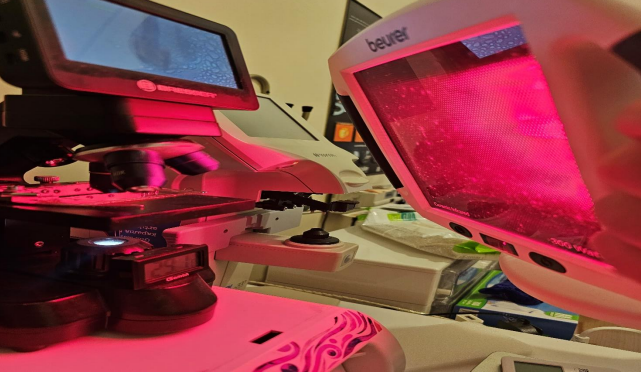
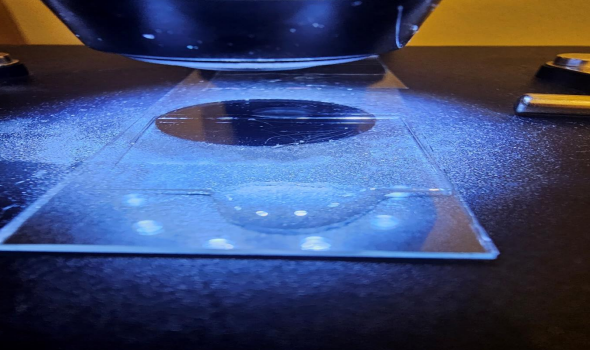
Although eyelash epilation and examination for ocular demodicosis under a microscope is a routine procedure in our ophthalmology clinic for rosacea patients with dry eye symptoms, we obtained informed consent from the two ocular rosacea patients who were randomly selected to examine their eyelashes from the outpatient clinic with a diagnosis of ocular demodicosis. This study was conducted in accordance with the tenets of the Declaration of Helsinki. By modifying the classical Coston method according to Gao’s suggestion, we epilated eight eyelashes, four from the lower eyelid and four from the upper eyelid of each patient in our Istanbul Medipol University Ophthalmology clinic [9]. In the first patient, we fixated four of these eyelashes with classical immersion oil and covered them with a coverslip. We used a high-resolution digital microscope (Bresser-Biolux Touch LCD, Bresser GmbH ), which was modified by attaching a noncontact digital thermometer(Gaman©, China) to measure the temperature of the slide.(Figure 1) the first reading of the thermometer was 22.5°C and after starting heating Beurer IL50 Infrared Heat Lamp (Beurer© GmbH, Ulm, Germany) it gradually increased to 45°C and kept steady at 45°C for 5 minutes.(Figure 2) All procedures were recorded using a digital camera for analysis. In the second patient, we again fixed 4 of these eyelashes with an ivermectin %1 mixture with immersion oil and covered them with a coverslip.(Figure 3) From the beginning to the death of Demodex, all procedures were recorded with the same digital microscope from the beginning to the death of Demodex.
Results:
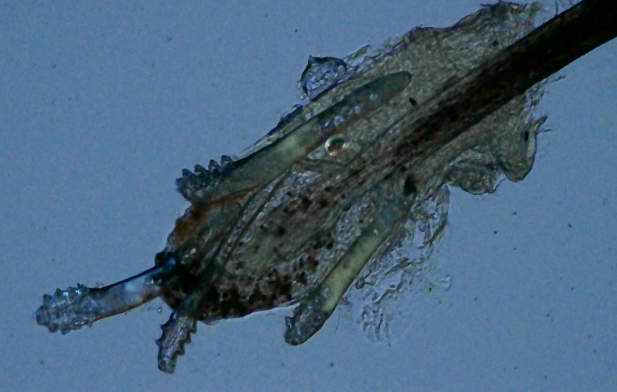
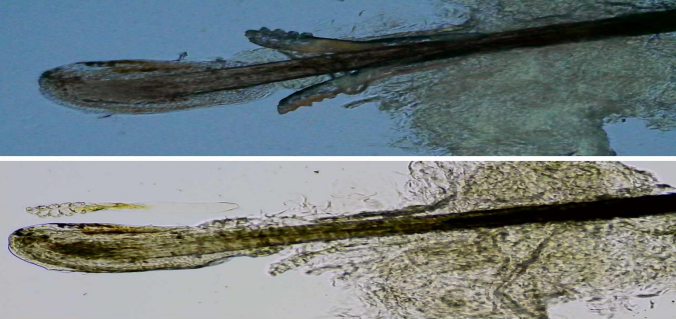
As the temperature increased gradually from the initial room temperature of 22.5°C, we observed that the podosome movements of Demodex mites started slowly. At 30°C, their movement became faster and out of sync. As the temperature reached 36°C, out-of-sync movements increased, and the parasites exhibited contractive movements, particularly at the point between the trunk and tail. When the temperature reached 45°C and was maintained for 5 min, the movements of the mites began to slow. Based on our previous experience, we stopped the heating process at 45°C to prevent excessive damage to the chitin skeleton of Demodex and potential harm to the video camera due to extreme heat (Figure 4-5). After a period of 2 h, we observed only the empty shriveled cytoskeleton of Demodex under a digital microscope, indicating their demise.(Figure 6) In addition to the heated group, we examined another set of four eyelashes that were only treated with immersion oil as a control. In this control group, Demodex mites remained alive even after 2 h and 24 h.
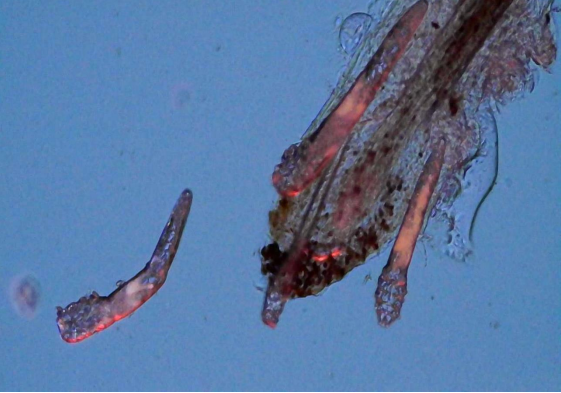
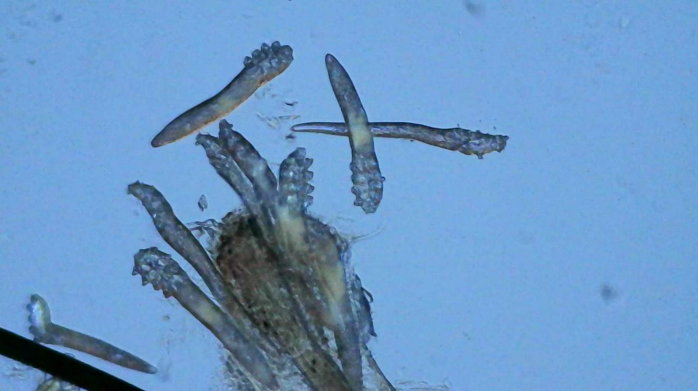
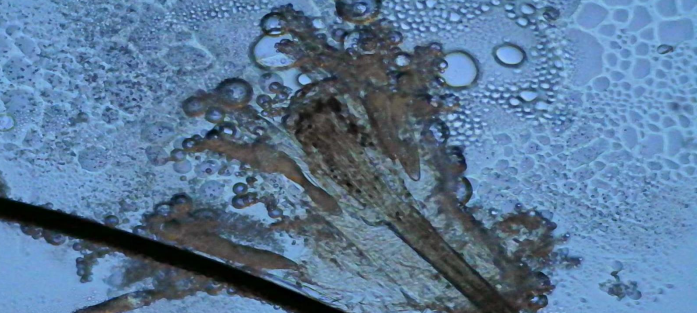
For the second patient, we wetted the first four eyelashes with 1% ivermectin solution in immersion oil and covered them with a coverslip.(Figure 3) The remaining four lashes were wetted with immersion oil as a control. Interestingly, upon the addition of the 1% ivermectin solution, we observed that the ivermectin molecules covered the eyelash and body of the Demodex, resembling a magnet-attracting metal or a guided missile (Figure 7). After 10 min, saponification of the oil inside the Demodex and eyelashes was observed (Figure 8). Within 30 min, no podosome movement was observed. Based on our observations, the acaricidal effect of heat was slow, but eventually resulted in the complete elimination of Demodex mites from the environment within 2-4 hours. In contrast, the acaricidal effect of ivermectin was very rapid, predictable, and appeared to be more selective under a live observation microscope.
Figure 1 Bresser microscope attached with a thermometer to measure the heat of the slide
Figure 2 Infrared Heater which is used for heating the slide up to 45°C
Figure 3 Slide covered with immersion oil and ivermectin
Figure 4 Pre-heat Picture of eyelash with Demodex colony
Figure 5 Post-heat Picture of eyelash with Demodex colony
Figure 6 Empty Cytoskeleton of Demodex Colony After Heat
Figure 7 Pre-ivermectin Picture of eyelash with Demodex colony
Figure 8 Post-ivermectin Picture of eyelash with Demodex colony
Discussion:
Demodex mites, which are saprophytic pathogens are important in both ophthalmology and dermatology. They are the most common ectoparasites found in human skin and eyes. First identified by anatomist Henle in 1841 and reported by Gustav Simon in 1842, these mites were initially not believed to be disease-causing agents for nearly 200 years [6,7]. When examining Demodex mites, they were observed in three anatomical parts: four pairs of legs, head, and a tail to which they were attached. There are two types, Demodex Folliculorum (DF) and Demodex Brevis (DB), that differ in structure and location. DF mites have a longer tail, are predominantly found on the eyelashes, and are located at the root of the cilia, with their heads attached to the lash root. In contrast, DB mites have shorter tails, are more commonly found in the body, and reside deep within glands. Female Demodex mites have a slightly shorter and rounder physique than males do. Both sexes have a genital opening, and fertilization occurs internally, typically within the opening of the hair follicle, whereas eggs are deposited inside the follicles or sebaceous glands [1,2,9,10]. The quantity of Demodex mites tends to increase with age, and older individuals are more susceptible to carrying these mites. It is believed that Demodex is transmitted to newborns through close physical contact shortly after birth, although infants and children generally have low colonization by Demodex owing to their low sebum production [11]. Certain populations such as medical staff or students who have frequent contact with different patients may be at a higher risk of Demodex infestation. Additionally, immunocompromised individuals such as those with HIV infection may represent another at-risk group. Demodex mites have an underdeveloped digestive system and are believed to lack an anüs [9,10]. Instead, they regurgitate the epithelial cells and fat they consume within a certain period. This regurgitation helps them attach themselves to the eyelashes, similar to spider web formations, as these parasites share a common ancestor with spiders [12]. Demodex mites, the activity of which is influenced by the melatonin of the human host and are very sensitive to light and heat. They become active in the evening, at around 8 p.m., and migrate to the eyelash edge to find a mate. Their life cycle lasts for 14-18 days, and they lay approximately 12-14 eggs on the edge of the lid. They cause mechanical damage to the eyelash edge of their fork-like hands, which function as claws and induce inflammation in patients through the release of lipases, cytokines such as IL-17, and MMP9 in their regurgitated material (vomit) [10-13].
Treating Demodex infestation and confirmed demodicosis presents a significant challenge as it involves complex and often prolonged therapy lasting several months. The main goals of treatment are to hinder parasite reproduction, eliminate mites, and prevent re-infestation. Systemic treatment options for demodicosis include antibiotics, such as tetracycline, doxycycline, metronidazole, and ivermectin. Topical treatments commonly used for demodicosis include metronidazole, permethrin, benzyl benzoate, crotamiton, lindane, and sulfur. Notably, these agents may cause skin irritation in some patients. Furthermore, various medicinal oils, sulfur ointments, yellow or white mercury ointments, and cholinesterase inhibitors have been used as therapeutic agents. However, it should be noted that there are currently no FDA-approved treatments for demodicosis [6,8,10,14].
In this study, we aimed to visualize and compare the effects of heat and ivermectin on Demodex folliculorum under in vitro conditions. The DF mites were gradually heated to 45°C and maintained at that temperature for 5 min, resulting in immobility of the podosomes. Heat-based treatment options have been explored in the literature, with studies observing the complete destruction of the organism after reaching a certain temperature using intense pulsed light (IPL) [7,8,15]. Our study design differed from previous research in that we used an infrared heater to increase the temperature of the slide under a microscope, which is a more affordable approach. Our results also demonstrated the destruction of DF mites by heat, especially at temperatures above 45°C, as it is believed that reaching this temperature leads to the demise of Demodex owing to the destruction of their chitinous bodies. However, before the destructive process, we observed different unsynchronised movements of the podosomes, resembling the writhing of the organism. This observation may help explain the effectiveness of IPL therapy on Demodex and rosacea, as demonstrated in other studies [16]. Heat, including the use of warm compresses, is a traditional method for treating conditions such as blepharitis, chalazion, and meibomian gland dysfunction (MGD) [15]. Our findings shed light on the mechanisms underlying these effects. It is important to note that our observations primarily focused on DF mites, while there is another species, DB (Demodex Brevis), residing in deeper layers of the skin. We currently lack comprehensive knowledge of how heat affects DB mites, and further research is needed to investigate their response to heat therapy.
In addition, we also investigated the in vitro effects of ivermectin. Our findings are interesting for this anti-parasitic drug. Ivermectin is one of the most important drugs in veterinary and human medicine for the control of parasitic infections and was the joint focus of the 2015 Nobel Prize in Physiology or Medicine, 35 years after its remarkable discovery [17]. It is a safe and effective orally administered antiparasitic drug. It is a semi-synthetic derivative of a family of macrocyclic lactones, called avermectins. It is a lipophilic drug that accumulates in fat tissue. Its selective activity against human parasites is due to its high affinity for glutamate-gated chloride ion channels found in the peripheral nervous system of invertebrates, and it does not readily cross the mammalian blood–brain barrier, where ligand-gated chloride ion channels are found in mammals; hence, humans are spared from the adverse central nervous system effects of the drug. It causes an influx of Cl − ions through the cell membrane of invertebrates by activating specific ivermectin-sensitive ion channels. The resultant hyperpolarization leads to muscle paralysis [18]. In refractory blepharitis, oral ivermectin reduces the Demodex mites in the lashes [6]. It has both antiparasitic and anti-inflammatory effects [19]. The side effects of oral ivermectin are diarrhea, dizziness, nausea, allergic reactions, skin swelling, fainting, fast heartbeat, fever, joint pain, vision changes, and yellowing of the eyes or skin [20]. As we applied ivermectin on the Demodex we observed a sudden attack of ivermectin molecules to the Demodex body and eyelash. Demodex and eyelashes attract ivermectin molecules such as magnets.(Figure 6) After 1 min, we observed the total covering of Demodex. Watching an ivermectin attack on Demodex is similar to watching sandscapes. After 10 min, saponification of the fat-like substance was observed in the middle of the Demodex body. I believe that this fat-like substance is also the reason for the meaning of Demodex. The name Demodex is derived from the Greek δημ?ς d?mos "fat" and δ?ξ d?x, "woodworm" [21]. After an hour of observation, there was no mobility left in the Demodex podosomes. According to current knowledge, this refers to the death of an organism.
The main differences between the two methods are the acaricidal speed and mechanism of action. The heat method was relatively slow, the effect is thought to be due to damage to the chitin layer of the organism protecting them from external habitat also my opinion is heating the fat content of the Demodex causes internal damage to the neuronal network of the organism. Another important topic for me is interestingly it seems like the organism was in death agony even at 45°C. In the future, we may think again when choosing an anti-acaricidal method with less agony to these symbiotic organisms. Conversely, after the application of ivermectin mixture %1 with immersion oil, Demodex showed no contractile movements; it seemed that the effect started very fast, and the fatal effect was very fast and with no agony. In addition, because ivermectin is administered orally, it has a systemic effect on both DF and DB. We have been using IPL locally for blepharitis for years, and we have obtained good results; however, if we do not decrease the Demodex on the face and on other body parts sooner or later, we will have the same problem again.
Conclusions
Both heat therapies, especially those over 45°C, and drug therapies such as ivermectin 1% in these cases have acaricidal effects but have different speeds, mechanisms, side effects, costs, and availability. When choosing the best method in our practice, we must collaborate with dermatologists. Further studies with more cases are needed to evaluate the exact mechanisms of these acaricidal treatments.
Acknowledgments: I am extremely grateful to my dear father, teacher, and ophthalmologist, Erol Demirci M.D, for his great ideas and support.
References
1. Rather PA, Hassan I. (2014). Human demodex mite: the versatile mite of dermatological importance. Indian J Dermatol, 59, 60-66. https://doi.org/10.4103/0019-5154.123498
2. Sastre N, Francino O, Curti JN, et al. (2016). Detection, prevalence and phylogenetic relationships of Demodex spp and further skin Prostigmata Mites (Acari, Arachnida) in wild and domestic mammals. PLoS One, 11, e0165765. https://doi.org/10.1371/journal.pone.0165765
3. Zhao YE, Guo N, Xun M, et al. (2011). Sociodemographic characteristics and risk factor analysis of Demodex infestation (Acari: Demodicidae). J Zhejiang Univ Sci B. Dec;12(12):998-1007. https://doi.org/10.1631/jzus.B1100079.
4. Wesolowska M, Knysz B, Reich A, et al. (2014). Prevalence of Demodex spp. in eyelash follicles in different populations. Arch Med Sci, 10, 319-324. https://doi.org/10.5114/aoms.2014.42572
5. Chudzicka-Struga?a I, Go??biewska I, Brudecki G, et al. (2023). Demodicosis in different age groups and alternative treatment options—A review. Journal of Clinical Medicine, 12, 1649. https://doi.org/10.3390/jcm12041649
6. Jacob S, VanDaele MA, Brown JN. (2019). Treatment of Demodex-associated inflammatory skin conditions: A systematic review. Dermatologic Therapy, 32, e13103. https://doi.org/10.1111/dth.13103
7. Cheng SN, Jiang FG, Chen H, et al. (2019). Intense Pulsed Light Therapy for Patients with Meibomian Gland Dysfunction and Ocular Demodex Infestation. Curr Med Sci, 39, 800-809. https://doi.org/10.1007/s11596-019-2091-y
8. Fishman HA, Periman LM, Shah AA. (2020). Real-Time Video Microscopy of In Vitro Demodex Death by Intense Pulsed Light. Photobiomodul Photomed Laser Surg, 38, 472-476. https://doi.org/10.1089/photob.2020.4850
9. Gao YY, Di Pascuale MA, Li W, et al. (2005). High prevalence of Demodex in eyelashes with cylindrical dandruff. Invest Ophthalmol Vis Sci, 46, 3089-3094. https://doi.org/10.1167/iovs.05-0020
10. Bitton E, Aumond S. (2021). Demodex and eye disease: a review. Clin Exp Optom, 104, 285-294. https://doi.org/10.1080/08164622.2020.1794335
11. Akkucuk S, Kaya OM, Aslan L, et al. (2023). Prevalence of Demodex folliculorum and Demodex brevis in patients with blepharitis and chalazion. Int Ophthalmol, 43, 1249-1259. https://doi.org/10.1007/s10792-022-02281-4
12. Sengbusch HG, Hauswirth JW. (1986). Prevalence of hair follicle mites, Demodex folliculorum and D. brevis (Acari: Demodicidae), in a selected human population in western New York, USA. J Med Entomol, 23, 384-388. https://doi.org/10.1093/jmedent/23.4.384
13. Kim JT, Lee SH, Chun YS, et al. (2011). Tear cytokines and chemokines in patients with Demodex blepharitis. Cytokine, 53, 94-99. https://doi.org/10.1016/j.cyto.2010.10.006
14. Rhee MK, Yeu E, Barnett M, et al. (2023). Demodex Blepharitis: A Comprehensive Review of the Disease, Current Management, and Emerging Therapies. Eye Contact Lens, 49, 311-318. https://doi.org/10.1097/ICL.0000000000000885
15. Murphy O, O' Dwyer V, Lloyd-Mckernan A. (2020). The Efficacy of Warm Compresses in the Treatment of Meibomian Gland Dysfunction and Demodex Folliculorum Blepharitis. Curr Eye Res, 45, 563-575. https://doi.org/10.1080/02713683.2019.1678581
16. Erta? R, Yaman O, Akku? MR, et al. (2019). The rapid effect of pulsed dye laser on demodex density of facial skin. J Cosmet Laser Ther, 21, 123-126. https://doi.org/10.1080/14764172.2019.1664907
17. Laing R, Gillan V, Devaney E. (2017). Ivermectin – Old Drug, New Tricks? Trends in Parasitology, 33(6), 463-472. https://doi.org/10.1016/j.pt.2017.01.007
18. Õmura, S., Crump, A. (2013). The life and times of ivermectin — a success story. Nat Rev Microbiol, 2, 984–989. https://doi.org/10.1038/nrmicro1744
19. Ozcan AA, Ulas B. (2021). Topical ivermectin in the treatment of blepharoconjunctivitis caused by demodex infestation. Eur Eye Res, 1, 167-169. https://doi.org/10.33425/2639-2513.1045
20. Holzchuh FG, Hida RY, Moscovici BK, et al. (2011). Clinical treatment of ocular Demodex foliculorum by systemic ivermectin. Am J Ophthalmol, 151, 1030–1034. https://doi.org/10.1016/j.ajo.2010.11.008
21. Coston TO. (1967). Demodex folliculorum blepharitis. Trans Am Ophthalmol Soc, 65, 361-392. PMID: 4229846; PMCID: PMC1310279.