Intact Endometrial Preparation for Frozen Embryo Transfers
Intact Endometrial Preparation for Frozen Embryo Transfers
Archana Singh1, Varsha Ojha2
1) Archana Singh, Consultant IVF & Gynecologist, Indira IVF, Jodhpur, India.
2) Varsha Ojha, Specialist Gynecologist & Obstetrician, Prime Hospital, Dubai, UAE.
*Correspondence to: Archana Singh, Consultant IVF & Gynecologist, Indira IVF, Jodhpur, India.
Copyright
© 2024 Archana Singh. This is an open access article distributed under the Creative Commons Attribution License, which permits unrestricted use, distribution, and reproduction in any medium, provided the original work is properly cited.
Received: 22 October 2024
Published: 01 November 2024
Intact Endometrial Preparation for Frozen Embryo Transfers
Introduction
Advancements in cryopreservation technology are leading to an increase in the number of frozen embryo transfer (FET) cycles in IVF, potentially surpassing the frequency of fresh embryo transfers. Several key factors influence the success of FET, including the quality of the frozen embryos, the developmental stage at which they were frozen, their survival rate after thawing, the number of embryos transferred, the duration of their storage, and the expertise of the operator performing the procedure.
A critical aspect of achieving successful FET outcomes is the preparation of the endometrium, which involves tailoring the environment to optimize implantation. This process typically includes the use of different preparation protocols, adequate progesterone support, and the precise identification of the receptive window, the ideal time for implantation to occur.
Endometrial preparation protocols can vary and may include natural cycles, programmed cycles, or ovulation induction. In a true natural cycle, the patient must have regular menstrual cycles and confirmed ovulation. This approach requires close monitoring, including tracking LH (luteinizing hormone) levels, measuring early luteal phase progesterone levels, and performing ultrasound monitoring to assess the dominant follicle. These steps are essential to synchronize the embryo transfer with the body’s natural cycle for optimal FET outcomes.
Methods
Method 1: Timing and Monitoring for Frozen Embryo Transfer (FET)
Days 10-12 of the menstrual cycle (approximately 3-5 days before the estimated ovulation day)
1. Serial Ultrasound (US):
Regular ultrasounds are conducted to monitor the development of the endometrium and the growth of the ovarian follicles.
- Endometrial thickness : The lining of the uterus is measured to ensure it is sufficiently thick to support implantation. Typically, a thickness of 7-14 mm is considered optimal.
- Follicular development : The size of the leading follicle is tracked. This helps predict ovulation and determine the timing for further testing.
2. LH Testing (Urine or Blood):
Detection of the LH surge : Luteinizing hormone (LH) levels are monitored, either through blood tests or home urine tests. A rise in LH signals that ovulation is imminent, typically occurring 24-36 hours before the release of the egg. This is a key indicator to help time the embryo transfer for optimal synchronization with the natural cycle.
3. Progesterone Levels:
Progesterone is measured, especially during the early luteal phase, to confirm that the body is adequately preparing for potential implantation. Rising progesterone levels post-ovulation support the endometrium and ensure it is receptive to the embryo.
4. Ultrasound Confirmation of Ovulation:
After ovulation, a follow-up ultrasound is performed to confirm that the dominant follicle has ruptured, indicating that ovulation has occurred. This helps ensure the transfer is precisely timed for the best chances of embryo implantation.
Method 2: Timing for Frozen Embryo Transfer (FET)
Transfer 3-5 days after ovulation , depending on the stage at which the embryo was frozen:
The timing of the embryo transfer is closely aligned with the development stage of the frozen embryo to synchronize the embryo's developmental stage with the endometrium’s readiness for implantation.
1. Day of Ovulation Corresponds to Egg Retrieval:
In natural cycles, the day of ovulation serves as a reference point, just like the day of egg retrieval in IVF cycles. This ensures that the uterine environment is synchronized with the stage of the embryo’s development.
2. Embryos Frozen at Day 3:
- For embryos that were frozen on Day 3 (when the embryo is in the cleavage stage), the transfer should be scheduled for ovulation day + 3 . This timing matches the embryo’s development with the post-ovulation endometrial environment, which should be ready for implantation at this point.
3. Embryos Frozen at Day 5 (Blastocyst Stage):
- If the embryo was frozen at the blastocyst stage (Day 5), the transfer should be scheduled for ovulation day + 5 . This ensures that the embryo is transferred into a uterine environment that is receptive at the blastocyst implantation stage.
Method 3: Luteal Phase Support (LPS) with Progesterone
- After ovulation, luteal phase support (LPS) is provided through progesterone supplementation to help prepare and maintain the uterine lining for implantation. Progesterone ensures that the endometrium remains in the optimal condition for the embryo to successfully implant and grow.
- LPS with progesterone can be administered in different forms, such as oral, vaginal, or intramuscular, depending on the protocol and patient needs. This hormonal support mimics the body’s natural post-ovulation environment, increasing the chances of a successful pregnancy by sustaining the uterine lining.
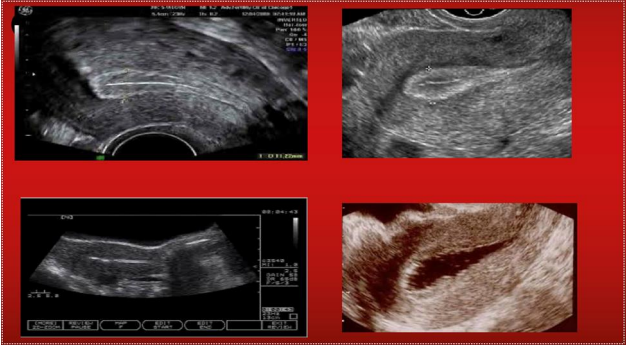
Fig 1: Endomertium Lining in IVF
Preparation methods
Programmed (Artificial) Cycles involve suppressing the natural menstrual cycle with or without the use of GnRH agonist, which requires exogenous estrogen for the proliferation of the endometrium while suppressing the developing dominant follicle. Estrogen administration is used on days 2 or 3 of the cycle until the endometrial thickness on U/S has reached approximately 8mm, and then progesterone [400mg twice daily] for the numbers of days proportional to the stage of development of the embryo being transferred.
Programmed FET Cycles are the most convenient with respect to limited monitoring requirements and ease and flexibility of scheduling. They are the best method for patients with irregular cycles but have not been shown to be superior to properly timed natural or modified natural FET cycles. Ovulation induction is the first choice for endometrial preparation for FET in patients with anovulatory and irregular cycles. Letrozle is the first choice for endometrial preparation for FET, followed by 2.5-5mg from D3 to D7 and administration of HCG when the follicles reach the criteria of maturity.
Progesterone supplementation in FET cycles has been well documented in elegant pharmacological studies that absorption of Progesterone into the endometrium is superior with vaginal P compared with IM P administration. However, two recent retrospective studies showed that increasing IM P doses to achieve higher serum levels does not translate into improved outcomes. High P levels (>20ng/ml) on the day of transfer of single euploid blastocysts were associated with lower ongoing PRs and lower live birth rates.
Personalized FET by adding 1-3 days of Progesterone and delaying FET in women with demonstrated delayed endometrial development is another consideration. It is known that E increases uterine contractility and subendometrial wave activity, and that P antagonizes this action to quiet the uterus and reduce endometrial waves. In controlled ovarian stimulation for ART, supraphysiologic levels of E are associated with multiple subendometrial contraction manifested as frequent endometrial waves.
Another consideration is the uterine activity at the time of FET, either spontaneous or resulting from traumatic or difficult FET. Augmentation with Progesterone administration when the contraction frequency is high should result in improved results.
Results
The results of Frozen Embryo Transfer (FET) procedures at the Integrated Fertility Center show significant changes in success rates over the years. Here's a breakdown of the success rates along with potential interpretations:
- 2011: 14.7%
The success rate for FET in 2011 was relatively low, suggesting that either the center was newly implementing FET procedures or was still optimizing its processes.
- 2012: 27.4%
There was a notable improvement in 2012, with almost double the success rate compared to 2011. This increase could be attributed to advancements in technology, improved patient care, or better embryo handling.
- 2013: 54.7%
A dramatic rise in success rates in 2013 indicates that the clinic likely refined its techniques, possibly incorporating new methodologies for embryo freezing or thawing, leading to better outcomes.
- 2014: 37.0%
After the peak in 2013, the success rate dropped in 2014. This could be due to various factors such as a different patient demographic, changes in staff, or external variables impacting outcomes.
- 2015: 49.6%
The success rate improved again in 2015, nearing 50%, showing that the center was maintaining relatively high success in its FET treatments.
- 2016: 50.0%
By 2016, the success rate plateaued at 50%, indicating stability in the clinic's procedures and a consistent level of success in fertility treatments through FET.
The overall trend shows that, over the span of six years, the Integrated Fertility Center made substantial improvements in their FET success rates, particularly between 2011 and 2013. Despite some fluctuations, the center managed to maintain a generally high success rate from 2013 onward.
Conclusion
The conclusion discusses the importance of optimizing Frozen Embryo Transfer (FET) procedures, focusing on the timing of embryo transfer and the role of progesterone (P) supplementation. Programmed FET cycles are preferred for their convenience and ease of scheduling, but the optimal method for progesterone (P) supplementation remains unresolved. Progesterone is crucial for preparing the endometrium to receive and support the embryo, and the best form and dosage are still under study.
The window of implantation, the period when the endometrium is most receptive to an embryo, may be delayed in approximately 25% of women in hormonally controlled cycles. This delay could lead to poor synchronization between the embryo transfer and the uterine lining's readiness, reducing pregnancy rates.
To address this issue, the conclusion suggests a personalized approach to embryo transfer (ET) by delaying the FET by adding 1-3 extra days of progesterone to enhance synchronization. This personalized timing, based on the patient's endometrium response, could improve pregnancy rates by ensuring the embryo is transferred at the optimal time for implantation.
In women with excessive uterine contractile activity, progesterone can have a stabilizing effect, helping calm the uterus and improve pregnancy outcomes. Detecting and addressing the variability in the window of implantation and uterine activity are critical steps towards enhancing the success of FET procedures.