Understanding Global Interactions: A Review of International Relations Theories and Practices
Understanding Global Interactions: A Review of International Relations Theories and Practices
Riya Singhal *1; Varsha Ojha 2
1) Riya Singhal, Deira International School.
2) Varsha Ojha, Consultant OBGYN, Prime Hospital, Dubai.
*Correspondence to: Riya Singhal, Deira International School.
Copyright
© 2025 Riya Singhal. This is an open access article distributed under the Creative Commons Attribution License, which permits unrestricted use, distribution, and reproduction in any medium, provided the original work is properly cited
Received: 12 May 2025
Published: 15 May 2025
DOI:https://doi.org/10.5281/zenodo.15681401
Abstract
International Relations (IR) is the interdisciplinary field that examines the interactions between sovereign states and other global actors. This article provides a thorough review of the foundational theories, key historical developments, current global challenges, and future trajectories of international relations. By integrating perspectives from political science, history, economics, and international law, this review aims to offer a well-rounded understanding of how international systems operate and evolve in an increasingly interconnected world.
Understanding Global Interactions: A Review of International Relations Theories and Practices
1. Introduction
The study of International Relations (IR) is central to understanding the architecture of global politics, diplomacy, economic systems, and conflict management. As the world grows more interdependent through globalization, digitalization, and the movement of people and capital, the significance of managing international affairs based on cooperation, competition, and strategic interest becomes paramount.
Historically, international relations were shaped by conquest, empire-building, and mercantilism. The Peace of Westphalia (1648), which ended the Thirty Years’ War, is often considered the birth of the modern state system, emphasizing sovereignty and non-interference. Over the centuries, power transitioned from empires to nation-states, and the 20th century witnessed the formalization of global organizations such as the United Nations, World Bank, and International Monetary Fund, reshaping how states interact.
Today, IR deals not only with military alliances and diplomacy but also with pressing global issues like climate change, terrorism, cyber security, trade wars, migration, and pandemics. The COVID-19 pandemic and the Ukraine-Russia war have underscored how quickly domestic events can ripple through the global system. In this dynamic landscape, international relations offer the tools to interpret, predict, and influence the global order.
2. Theoretical Foundations of International Relations
2.1. Realism
Realism is one of the oldest and most influential theories in IR. Rooted in the works of Thucydides, Machiavelli, and Hobbes, realism posits that the international system is anarchic, with no central authority above sovereign states. States act primarily in their self-interest, seeking power and security in a hostile world. Notable modern realists include Hans Morgenthau and Kenneth Waltz.
Realism explains events like arms races, military interventions, and balance-of-power politics. Critics argue that it downplays the role of international cooperation, norms, and non-state actors.
2.2. Liberalism
In contrast, liberalism emphasizes cooperation, democracy, economic interdependence, and international institutions. Liberal theorists like Immanuel Kant envisioned perpetual peace through democratic governance and trade. In the 20th century, thinkers like Robert Keohane and Joseph Nye argued that institutions like the UN and WTO help mitigate conflict and promote mutual benefits.
Liberalism explains the rise of multilateral diplomacy, trade agreements, and the spread of democratic norms. However, critics point out its optimism, especially in the face of authoritarian resurgence and institutional gridlock.
2.3. Constructivism
Constructivism, led by scholars like Alexander Wendt, posits that the international system is shaped not only by material power but also by ideas, identities, and social norms. States act based on perceived identities (e.g., allies or enemies), and international norms evolve over time.
Constructivism helps explain phenomena like the global human rights movement, nuclear taboo, and norm-based interventions. It emphasizes the role of discourse and collective understanding in shaping international behavior.
2.4. Other Perspectives
- Marxist and Critical Theories focus on economic exploitation and the role of capitalism in global inequality.
- Feminist IR Theory critiques the male-dominated assumptions of traditional IR, highlighting how gender shapes power dynamics.
- Postcolonial Theories interrogate the legacies of imperialism and colonialism in current international power structures.
3. Evolution of the International System
3.1. The Westphalian System
The 1648 Treaty of Westphalia introduced the concept of state sovereignty, laying the groundwork for modern nation-states. It emphasized legal equality, territorial integrity, and non-interference—principles still central to IR today.
3.2. Colonialism and Imperialism
From the 16th to early 20th centuries, European powers expanded their territories, extracting resources and imposing systems of governance. The colonial legacy continues to shape global inequalities, border conflicts, and North-South relations.
3.3. The World Wars and Cold War
The two World Wars demonstrated the catastrophic consequences of power politics, leading to the creation of global institutions to prevent future conflicts. The Cold War (1947–1991) introduced a bipolar world order dominated by the U.S. and USSR, with proxy wars, ideological battles, and nuclear brinkmanship.
3.4. Post-Cold War Unipolarity and Globalization
After 1991, the U.S. emerged as a unipolar power, advocating liberal democracy and free markets. Globalization accelerated, integrating economies and increasing interdependence. However, the early 21st century witnessed rising multipolarity, with powers like China, Russia, and India asserting greater influence.
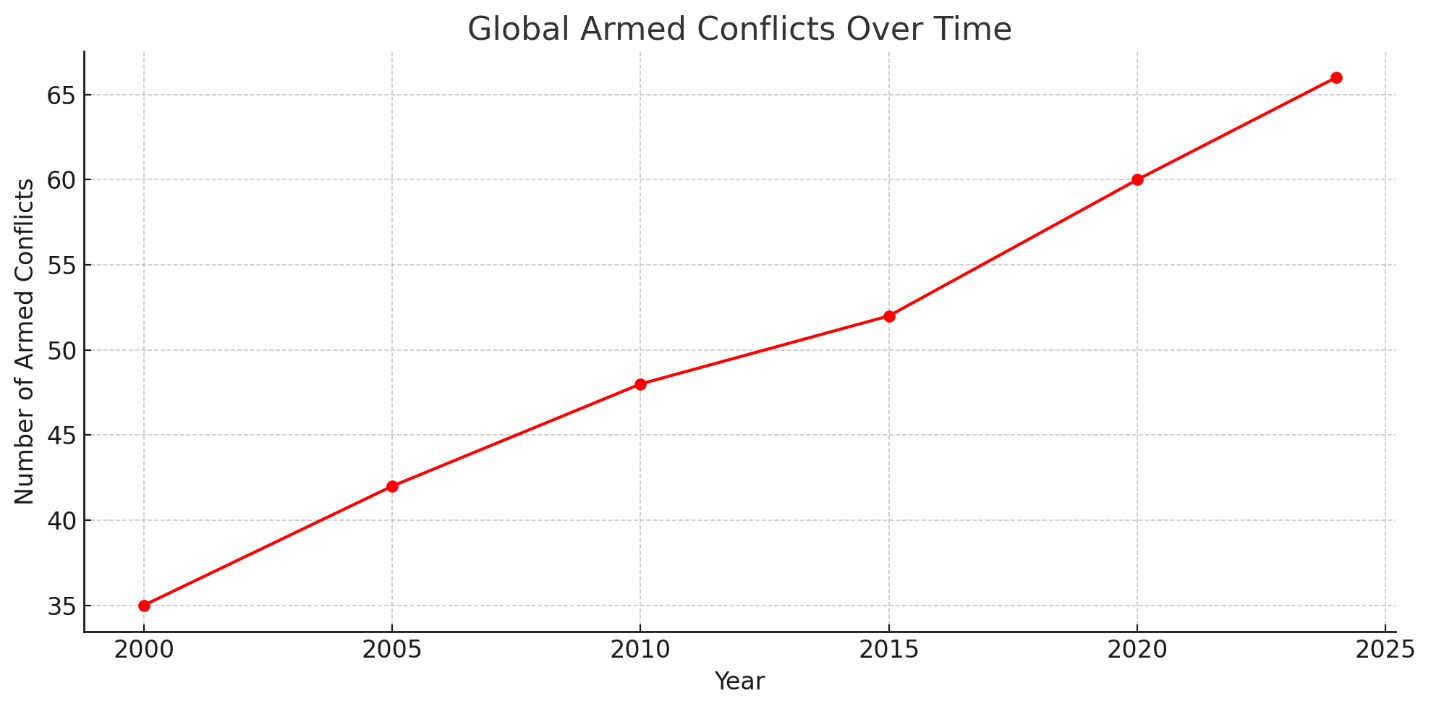
Fig 1: Global Armed Conflicts Over Time – showing the rise in international conflicts from 2000 to 2024.
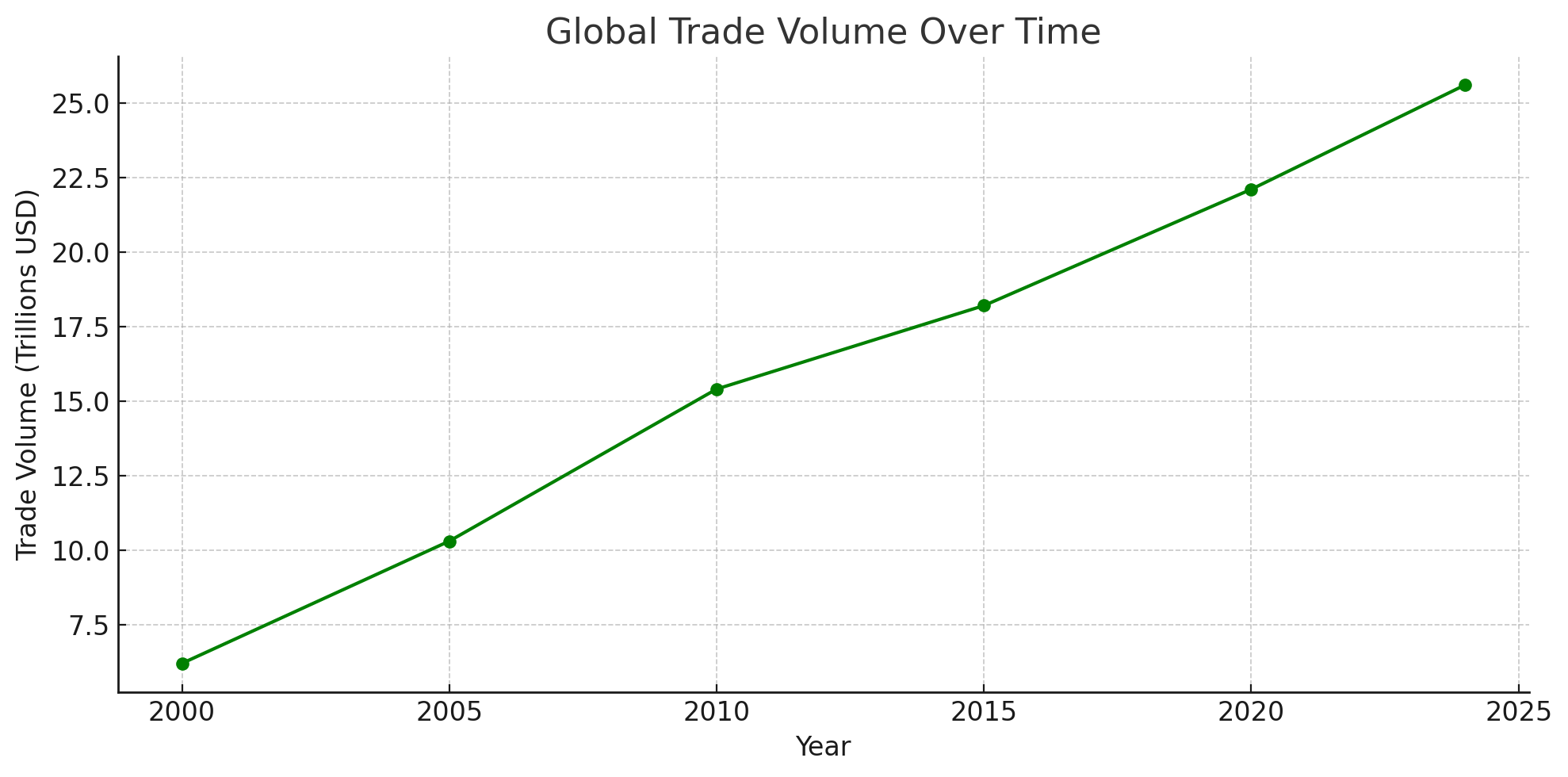
Fig 2: Global Trade Volume Over Time – highlighting the steady growth in global trade.
Table 1: Key International Organizations and Their Roles
|
Organization |
Year Established |
Main Function |
Notable Achievements |
|---|---|---|---|
|
United Nations (UN) |
1945 |
Peacekeeping, development, human rights |
SDGs, multiple peace missions |
|
World Trade Organization (WTO) |
1995 |
Facilitates global trade rules |
Trade dispute resolution |
|
World Health Organization (WHO) |
1948 |
Global health monitoring and response |
COVID-19 coordination, disease eradication |
|
International Criminal Court (ICC) |
2002 |
Prosecution of war crimes, genocide, etc. |
Trials of war criminals |
|
NATO |
1949 |
Military alliance and collective defense |
Security in transatlantic region |
4. Key Actors in International Relations
4.1. Nation-States
States remain the primary actors in IR, possessing sovereignty, legal authority, and monopoly on the use of force. Their interests vary based on geography, regime type, economic structure, and historical context.
4.2. International Organizations
Entities like the United Nations (UN), World Trade Organization (WTO), World Health Organization (WHO), and International Criminal Court (ICC) coordinate global efforts in peacekeeping, trade, health, and justice. Despite limitations, they represent collective efforts to govern beyond borders.
4.3. Non-Governmental Organizations (NGOs)
NGOs like Amnesty International and Médecins Sans Frontières influence policy through advocacy, humanitarian work, and monitoring. They often fill gaps left by state or institutional inaction.
4.4. Multinational Corporations (MNCs)**
Corporations like Google, ExxonMobil, and Amazon possess economic power rivaling some states. They influence trade, labor practices, environmental policy, and cybersecurity—necessitating a reevaluation of traditional IR paradigms.
5. Contemporary Issues in International Relations
5.1. Global Security and Conflict
Terrorism, cyber warfare, and asymmetric conflicts redefine modern warfare. NATO, regional defense alliances, and peacekeeping missions attempt to contain these threats. The Russia-Ukraine war reignited discussions about sovereignty, deterrence, and international response.
5.2. Trade and Economic Relations
Trade agreements like NAFTA, the European Union, and Belt and Road Initiative illustrate economic diplomacy and strategic partnerships. Currency manipulation, tariffs, and trade wars (e.g., U.S.–China) highlight tensions in global trade regimes.
5.3. Climate Change and Environmental Diplomacy
Climate agreements like the Paris Accord reflect growing consensus on climate action. Yet, implementation remains uneven, with tensions between developed and developing countries on responsibility, funding, and technology transfer.
5.4. Global Health and Pandemics
COVID-19 exposed weaknesses in global coordination. The WHO faced criticism for delayed responses and limited enforcement power. The pandemic emphasized the need for collective action in health security, vaccine equity, and pandemic preparedness.
5.5. Migration and Refugee Crises
Conflicts, economic collapse, and climate change are driving mass migrations. Countries face dilemmas balancing humanitarian obligations with national security. The Global Compact for Migration (2018) marked a step toward a coordinated international response.
6. Emerging Trends and the Future of International Relations
6.1. Rise of Multipolarity
The world is transitioning from U.S.-led unipolarity to a multipolar system. China’s Belt and Road Initiative, India’s strategic partnerships, and regional organizations (e.g., ASEAN, AU) are diversifying global power centers.
6.2. Digital Diplomacy and Cyber Politics
States now engage through social media, online summits, and digital campaigns. Cybersecurity, digital rights, and information warfare are new frontiers requiring novel diplomatic strategies and ethical norms.
6.3. Space and Technology Governance
With countries and private firms exploring space (e.g., SpaceX, China’s moon missions), outer space has become a domain of strategic interest. The lack of comprehensive space governance presents future risks.
6.4. Transnational Activism
Youth-led movements, indigenous rights campaigns, and transnational environmental advocacy reflect a growing trend in global civil society asserting influence on global policies.
7. Conclusion
International Relations is a dynamic and evolving field that continues to shape the fate of nations and the global order. Understanding the theories, actors, and challenges of IR allows policymakers, scholars, and citizens to navigate an increasingly complex world. The future of global peace, justice, and cooperation depends on our collective ability to foster dialogue, respect diversity, and pursue mutual interests through ethical, inclusive, and strategic action.
References
1. Morgenthau, H. J. (1948). Politics Among Nations: The Struggle for Power and Peace. Knopf.
2. Waltz, K. N. (1979). Theory of International Politics. McGraw-Hill.
3. Keohane, R. O., & Nye, J. S. (1977). Power and Interdependence: World Politics in Transition. Little, Brown.
4. Wendt, A. (1992). "Anarchy is what states make of it: The social construction of power politics". International Organization, 46(2), 391–425.
5. United Nations. (2023). UN Peacekeeping Operations Report. https://www.un.org
6. World Bank. (2024). Global Economic Prospects. https://www.worldbank.org
7. International Crisis Group. (2024). Conflict Tracker. https://www.crisisgroup.org
8. WTO. (2024). Annual Report. https://www.wto.org.