
Coexistence of Mediastinal Sarcoidosis and Pulmonary Metastasis from Endometrial Cancer: The Contribution of Endobronchial Ultrasound (EBUS).
Coexistence of Mediastinal Sarcoidosis and Pulmonary Metastasis from Endometrial Cancer: The Contribution of Endobronchial Ultrasound (EBUS).
Dr Hind Janah*1, Dr Ilham Khalfaoui2, Dr Khadija Redouane3, Pr Hicham El attar4
1. Dr Hind janah, interventional pulmonplogist, littoral clinic, Casablnca, Morocco
2. Dr Ilham Khalfaoui, Oncologist , Casablanca, Morocco
3. Dr Khadija Redouane, radiologist, Casablanca, Morocco
4. Pr Hicham El attar, Pathologist, Annasr pathology center , el jadida , Morocco.
Correspondence to: Dr Hind Janah, interventional pulmonplogist, littoral clinic, Casablnca, Morocco.
Copyright
© 2024 Dr Hind Janah. This is an open access article distributed under the Creative Commons Attribution License, which permits unrestricted use, distribution, and reproduction in any medium, provided the original work is properly cited.
Received: 16 June 2025
Published: 04 Aug 2025
Abstract
Background: The co-occurrence of cancer and sarcoidosis, although reported in the literature, poses a diagnostic challenge, especially in patients with a history of prior oncologic therapies. Differentiating between tumor progression, sarcoid-like reactions (SLR), and true sarcoidosis is critical for appropriate clinical management.
Case Presentation: We present the case of a patient undergoing surveillance for metastatic endometrial cancer who was found to have suspicious mediastinal lymphadenopathy. Her prior exposure to radiotherapy and chemotherapy complicated the diagnostic evaluation.
Endobronchial ultrasound-guided transbronchial needle aspiration (EBUS-TBNA) revealed non- caseating granulomatous lymphadenitis, ultimately establishing a diagnosis of mediastinal sarcoidosis and excluding metastatic involvement.
Discussion: This case underscores the importance of histopathological assessment of mediastinal lymphadenopathy in cancer patients. Sarcoidosis or SLR should be included in the differential diagnosis, as they can simulate tumor progression. EBUS-TBNA is a valuable technique for obtaining an accurate diagnosis and preventing inappropriate therapeutic interventions.
Conclusion: EBUS-TBNA is a critical diagnostic modality for distinguishing between mediastinal sarcoidosis and metastatic disease in cancer patients. A multidisciplinary approach is paramount for optimizing the care of these complex cases.
Keywords: Endometrial Cancer, Sarcoidosis, Mediastinal Lymphadenopathy, EBUS-TBNA, Sarcoid-like Reaction, Differential Diagnosis, Oncology
Coexistence of Mediastinal Sarcoidosis and Pulmonary Metastasis from Endometrial Cancer: The Contribution of Endobronchial Ultrasound (EBUS).
Clinical Observation
A 46-year-old woman, with no significant past medical history, had been treated in 2017 for an endometrioid adenocarcinoma of the endometrium (pT2) with exclusive pelvic radiotherapy (50 Gy in 25 fractions) and placed under surveillance. The patient was lost to follow-up until May 2023, when a thoraco-abdomino-pelvic CT scan showed a cavitary mass of 49×19 mm in the upper right lobe of the lung. The CT-guided transthoracic biopsy revealed a poorly differentiated carcinoma suggestive of peritoneal metastasis (immunohistochemistry was positive for estrogen and progesterone receptors, and negative for TTF-1 and p40). The patient received three cycles of paclitaxel-carboplatin chemotherapy. In December 2023, a control CT scan showed an increase in the pulmonary mass (52×47 mm) and the appearance of a right paratracheal lymph node. The medical team opted for palliative chemotherapy: paclitaxel 175mg/m2 day 1 + carboplatin AUC 5 day 1, 03 cycles every 21 days.
The PET-CT scan performed in April 2024 revealed a cavitary mass in the upper right lobe with intense hyperfixation (SUVmax 11) with several mediastinal and hilar lymphadenopathies; the most hypermetabolic lymph node was located in the Barety space (SUVmax 7.6).
The patient was referred to our center in Morocco, and an EBUS-TBNA revealed non-caseating granulomatous lymphadenitis, compatible with sarcoidosis. Labial and cavum biopsies confirmed granulomatous inflammation without caseous necrosis. The infectious workup was negative.
A second pulmonary biopsy confirmed the metastatic nature of the pulmonary mass of an endometrioid adenocarcinoma, with expression of estrogen and progesterone receptors (ER+, PR+). The case was discussed in a multidisciplinary tumor board, and the therapeutic decision was a second line of chemotherapy (Dostarlimab) associated with hormone therapy given the positivity of the hormone receptors.
After confirmation of the diagnosis by EBUS-TBNA and transthoracic needle biopsy, the patient returned to her country for further management.
A post-chemotherapy PET scan showed the disappearance of the pulmonary lesion and the persistence of lymphadenopathies that were of sarcoidosis origin.
Fig 1
Fig 2
Fig 3
Discussion
This case report highlights the diagnostic challenge of the coexistence of a metastatic endometrial carcinoma and a mediastinal sarcoidosis, especially in a patient who had received pelvic radiotherapy and chemotherapy [1, 2]. Although the relationship of granulomatous disease and malignancy was initially reported in 1974, it continues to be a clinical puzzle to separate tumor occurrence, sarcoid-like reaction (STR), and true sarcoidosis. It is critical to differentiate between true sarcoidosis and a sarcoid-like reaction (STR) since the latter, an inflammatory granulomatous reaction seen in response to a tumor antigen, may not necessarily have to be treated systemically. The pathogenesis of STR is not simple and would be a local immune response to the tumor antigens.
Literature highlights that sarcoidosis can mimic tumor growth and, for this reason, is especially challenging to diagnose in oncologic follow-up patients [3, 4]. Literature has described similar cases of sarcoidosis arising in the setting of anticancer therapies, where it is revealed that mediastinal adenopathies are secondary to a granulomatous reaction and not metastasis. It must be mentioned that some studies do not differentiate between systemic sarcoidosis and STR, and this could potentially make data interpretation complex. For example, Brincker has reported on sarcoidal reactions in the context of many different malignancies [10]. In this case, the EBUS- TBNA diagnosed a granulomatous non-caseating lymphadenitis [5].
This case highlights the necessity of a meticulous histologic examination of mediastinal adenopathies in patients with cancer [11]. The differential diagnosis of mediastinal adenopathies also includes infections (tuberculosis, fungal) and other lymphoproliferations, highlighting once again the essential role of EBUS-TBNA. Other diagnoses, such as sarcoidosis or an STR, must be entertained to prevent inappropriate therapy [6]. Our study results add additional evidence to the concept that EBUS-TBNA is an effective and efficient method of diagnostic sampling in this challenging milieu [7].
It is only fitting to state the limitations present in the uniqueness of this case. The patient was observed after a duration of absence, and the observations on biopsies may not be extrapolated to the overall oncologic population. Moreover, the biopsy results need to be interpreted in the setting of the patient's unique clinical situation, such as her background of radiotherapy and chemotherapy. Radiotherapy, for example, may induce inflammatory changes in tissues. Follow- up over the long term is required to determine the effect of treatment and the evolution of the sarcoidosis (or STR).
Reflections on care
The decision to treat sarcoidosis (or STR) will depend on the level of symptoms, the extent of organ involvement, and the effect on the quality of life of the patient. Treatment may be with corticosteroids or other immunosuppressants, but this should be carefully weighed considering the potential side effects and medication interaction with the cancer therapy. The management requires a multidisciplinary strategy including oncologists, pulmonologists, and pathologists for the best management [14]. Sarcoidosis is treated in an oncological setting based on decision algorithms proposed, with all the complexity of these decisions [15].
Conclusion
In conclusion, this case illustrates the importance of a histological confirmation in the context of mediastinal adenopathies in oncologic patients. EBUS-TBNA played an essential role in achieving a proper diagnosis, thus enabling the proper guidance of treatment. A multidisciplinary approach to the management of oncologic treatment complications is also illustrated by this case.
References
Iannuzzi, M. C., & Rybicki, B. A. (2007). Sarcoidosis. The New England Journal of Medicine, 357(21), 2156-2169. Baughman, R. P., et al. (2011). Sarcoidosis: a review of the clinical features, diagnosis, and management. The Journal of the American Medical Association, 305(4), 394-404. Janssen, S., et al. (2013). The role of EBUS-TBNA in the diagnosis of mediastinal lymphadenopathy. Chest, 143(4), 1008-1015. Murray, S., et al. (2020). The relationship between sarcoidosis and malignancy. Clinical Lung Cancer, 21(2), e168-e175. Pereira, S. F., et al. (2017). Granulomatous diseases and cancer: a review. European Journal of Internal Medicine, 39, 16-22. Schaaf, H. S., & van Zyl-Smit, R. N. (2016). Sarcoidosis and cancer: a review. Respiratory Medicine, 116, 1-6. Rybicki, B. A., et al. (1997). Familial aggregation of sarcoidosis. American Journal of Respiratory and Critical Care Medicine, 156(5), 1659-1664. Brincker, H. (1986). Sarcoid reactions in malignant disease. Cancer Treatment Reviews, 13(3), 147-156. Yasufuku, K., et al. (2008). Endobronchial ultrasound-guided transbronchial needle aspiration for mediastinal lymphadenopathy. Chest, 133(3), 585-593. Martone, F., et al. (2018). Sarcoidosis in cancer patients: diagnostic and therapeutic challenges. Journal of Thoracic Disease, 10(Suppl 14), S1728-S1736.
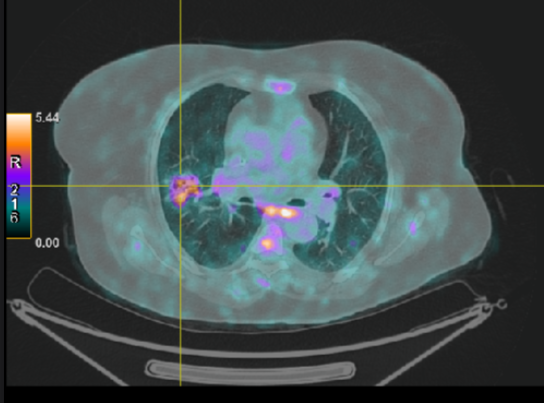
Figure 1
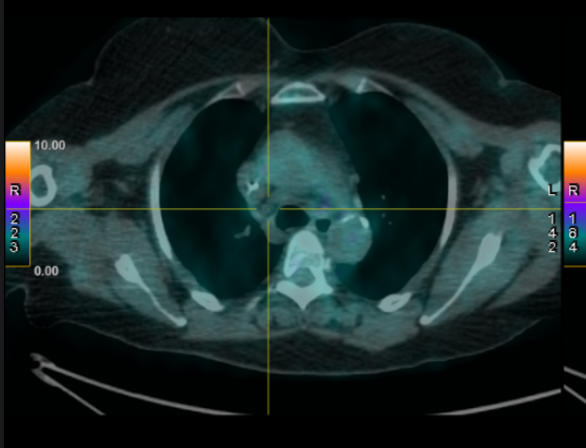
Figure 2
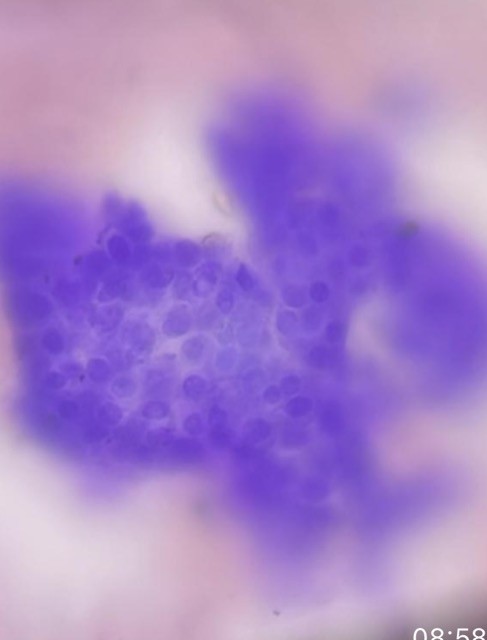
Figure 3