
Attitudes and Behaviors toward Dyslipidemia Prevention
Attitudes and Behaviors toward Dyslipidemia Prevention
Dr. Trong Thanh Tran *
*Correspondence to: Dr. Trong Thanh Tran, Medical Oncologist | Internal Medicine, Palliative Care for Cancer Patients. Nguyen Virtue School.
Copyright.
© 2024 Dr. Trong Thanh Tran. This is an open access article distributed under the Creative Commons Attribution License, which permits unrestricted use, distribution, and reproduction in any medium, provided the original work is properly cited.
Received: 05 December 2024
Published: 28 December 2024
DOI: https://doi.org/10.5281/zenodo.14857799
Abstract
This study evaluates the attitudes and behaviors of postal employees toward dyslipidemia prevention, focusing on their willingness to adopt lifestyle changes. It identifies the gaps between positive attitudes and actual behaviors, emphasizing the need for workplace-based interventions.
Attitudes and Behaviors toward Dyslipidemia Prevention
Introduction
Dyslipidemia, a significant risk factor for cardiovascular diseases, requires comprehensive prevention strategies. Behavioral modifications such as adopting a healthy diet, regular physical activity, smoking cessation, and limiting alcohol consumption are proven to manage this condition effectively. Despite awareness, the transition from positive attitudes to actionable behaviors remains a challenge. This article examines the attitudes and behaviors of postal employees, a demographic exposed to occupational stress and sedentary work environments.
Methodology
- Study Design: A cross-sectional survey conducted among postal employees.
- Participants: 508 employees aged 40–60 years.
- Assessment Tools:
- Attitudes: Assessed using a 5-point Likert scale, measuring willingness to adopt lifestyle changes.
- Behaviors: Self-reported practices on diet, exercise, smoking, and alcohol consumption.
- Data Analysis: Statistical comparisons by demographics (age, gender).
Results
1. Attitudes Toward Preventive Behaviors:
- 89.1% expressed a willingness to modify unhealthy lifestyles.
- 80.2% agreed on the need to take prescribed medication if diagnosed.
- 1.2% felt no changes were necessary despite risks.
2. Self-Reported Behaviors:
- Physical Activity: Only 67.1% engaged in regular exercise.
- Dietary Changes: 59.8% followed a healthy diet, including fruits and vegetables.
- Alcohol Limitation: 24.6% reported limiting alcohol intake.
- Smoking: 65.1% reported being non-smokers, but 27.4% admitted difficulty quitting.
3. Behavioral Discrepancies by Demographic:
- Women were more likely to engage in healthy eating (72%) than men (48%).
- Younger employees (<50 years) showed greater adherence to exercise routines.
Tables and Figures
|
Attitudes Toward Preventive Measures |
Percentage (%) |
|---|---|
|
Willing to change unhealthy lifestyle |
89.1 |
|
Willing to take prescribed medication |
80.2 |
|
No changes necessary |
1.2 |
|
Preventive Behaviors |
Percentage (%) |
|---|---|
|
Engaged in regular physical activity |
67.1 |
|
Followed a healthy diet |
59.8 |
|
Limited alcohol consumption |
24.6 |
|
Non-smokers |
65.1 |
|
Struggled to quit smoking |
27.4 |
Figure 1
Figure 2
Figure 3: Behavioral Adherence Rates by Gender
- Physical activity: Men (60%), Women (74%)
- Healthy diet: Men (48%), Women (72%)
Discussion
This study highlights a discrepancy between positive attitudes and preventive behaviors. Although most employees recognize the importance of lifestyle changes, behavioral adherence remains suboptimal. Key barriers include:
• Workplace Stress: High workloads may hinder regular physical activity and healthy eating habits.
• Access to Resources: Limited availability of wellness programs or counseling services in workplace settings.
To bridge the gap, tailored interventions must address these barriers. Workplace wellness programs, nutritional counseling, and stress management workshops can play a pivotal role.
Conclusion
While postal employees exhibit positive attitudes toward dyslipidemia prevention, gaps in behavioral adherence are evident. Workplace interventions should focus on:
1. Addressing workplace stress through flexible work hours and mental health resources.
2. Enhancing access to fitness and dietary counseling programs.
3. Providing smoking cessation support and stress-relief workshops.
Implementing these measures will promote sustainable behavior changes and mitigate dyslipidemia risks effectively.
References
1. World Health Organization. (2023). Dyslipidemia and Cardiovascular Risks.
2. National Institute of Occupational Health. (2023). Stress and Behavioral Changes in Sedentary Workers.
3. Smith J. et al. (2022). Addressing the Attitude-Behavior Gap in Health Interventions.
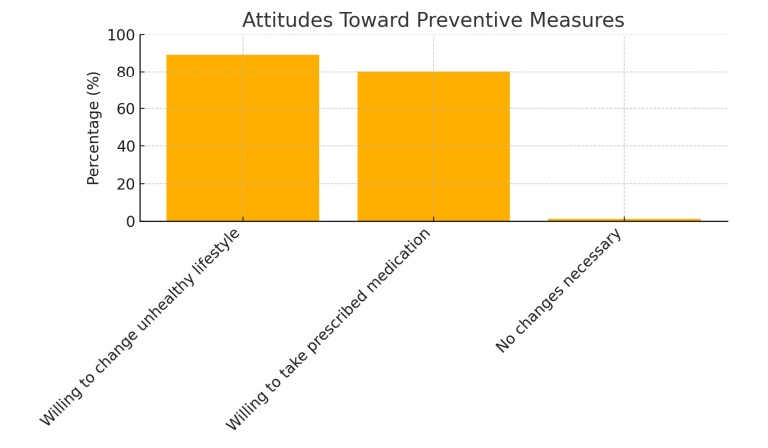
Figure 1
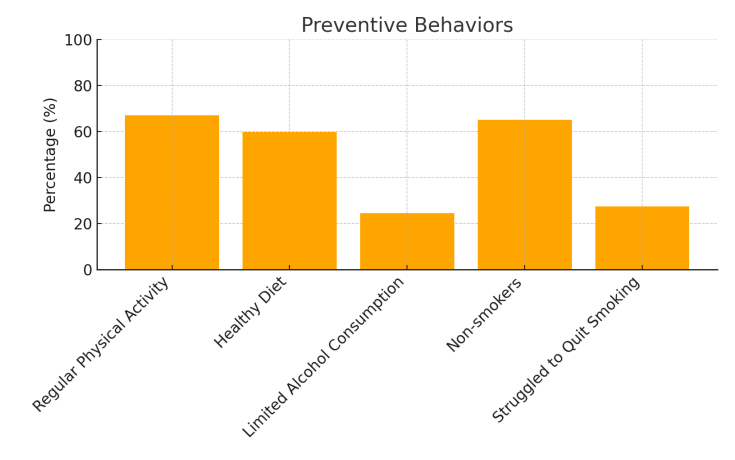
Figure 2
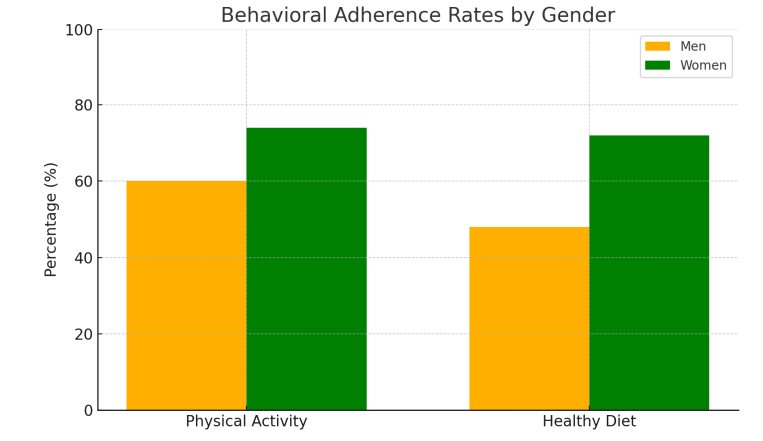
Figure 3