
A Comprehensive Review of Economic Systems, Theories, and Contemporary Global Challenges
A Comprehensive Review of Economic Systems, Theories, and Contemporary Global Challenges
Riya Singhal *1; Varsha Ojha 2
1) Riya Singhal, Deira International School.
2) Varsha Ojha, Consultant OBGYN, Prime Hospital, Dubai.
*Correspondence to: Riya Singhal, Deira International School.
Copyright
© 2025 Riya Singhal. This is an open access article distributed under the Creative Commons Attribution License, which permits unrestricted use, distribution, and reproduction in any medium, provided the original work is properly cited
Received: 12 May 2025
Published: 15 May 2025
DOI:https://doi.org/10.5281/zenodo.15681452
Abstract
Economics, as a discipline, provides the foundational framework for understanding how societies allocate limited resources among competing needs. It encompasses a vast body of theory and empirical analysis relating to production, distribution, consumption, and wealth management. This review article explores the evolution of economic thought from classical to modern frameworks, critically assesses the main economic systems—capitalism, socialism, and mixed economies—and evaluates pressing global economic issues such as inequality, inflation, unemployment, and globalization. Special focus is placed on how economic theories translate into policy and real-world outcomes. Through a comparative and interdisciplinary lens, this article aims to offer a holistic understanding of economics in the 21st century.
A Comprehensive Review of Economic Systems, Theories, and Contemporary Global Challenges
1. Introduction
Economics, often described as the science of scarcity and choice, is an essential field of inquiry in both academic and policy circles. Its importance stems from its pervasive influence on individuals, governments, businesses, and international institutions. At its core, economics seeks to understand how societies make decisions about resource use, wealth creation, and consumption in the face of limited availability.
Historically, economics emerged as a distinct discipline during the Enlightenment era, with the publication of Adam Smith’s The Wealth of Nations in 1776. Smith introduced the concept of the "invisible hand"—the idea that individual self-interest in a free market leads to collective economic well-being. Following Smith, classical economists such as David Ricardo and Thomas Malthus laid the groundwork for theories on comparative advantage and population dynamics. In the 20th century, economists like John Maynard Keynes revolutionized macroeconomic thought by emphasizing the role of government intervention during economic downturns, particularly through fiscal and monetary policy.
Today, economics has expanded beyond markets and monetary flows to include behavioral insights, environmental sustainability, digital innovation, and global integration. The COVID-19 pandemic, climate change, rising inequality, and geopolitical conflicts have profoundly challenged economic assumptions and highlighted the need for adaptive and inclusive models. Consequently, this article reviews the evolution of economic systems and ideas while examining their practical applications and ongoing debates in today’s rapidly changing world.
2. Major Economic Systems
2.1. Capitalism
Capitalism is characterized by private ownership of the means of production, profit-driven enterprise, and market competition. It promotes innovation, efficiency, and consumer choice, but is often criticized for generating inequality and environmental degradation. Key proponents include Adam Smith and Milton Friedman.
Advantages:
- High productivity
- Incentives for innovation
- Consumer sovereignty
Disadvantages:
- Wealth concentration
- Market failures (e.g., monopolies)
- Environmental externalities
2.2. Socialism
Socialism advocates for public or collective ownership of resources and centralized planning. Rooted in the ideas of Karl Marx and Friedrich Engels, socialism aims to reduce inequality and promote social welfare.
Advantages:
- Economic equality
- Strong public services
- Employment stability
Disadvantages:
- Reduced incentives
- Bureaucratic inefficiencies
- Limited consumer choice
2.3. Mixed Economies
Most modern nations operate as mixed economies, combining market mechanisms with state regulation. Examples include the Nordic model, which blends capitalism with strong social welfare policies.
Balance of Benefits:
- Competitive markets + social safety nets
- Regulatory frameworks to prevent crises
- Public goods provision (e.g., healthcare, education)
3. Evolution of Economic Thought
|
School of Thought |
Key Figures |
Core Ideas |
|---|---|---|
|
Classical |
Adam Smith, David Ricardo |
Free markets, self-regulation, comparative advantage |
|
Keynesian |
John Maynard Keynes |
Government intervention, aggregate demand, fiscal policy |
|
Monetarist |
Milton Friedman |
Role of money supply, limited state intervention |
|
Neoclassical |
Alfred Marshall, Paul Samuelson |
Marginal utility, supply and demand equilibrium |
|
Behavioral |
Daniel Kahneman, Richard Thaler |
Psychology in economic decision-making |
|
Marxist |
Karl Marx |
Class struggle, labor theory of value, planned economy |
4. Contemporary Economic Challenges
4.1. Income Inequality
Rising disparities in wealth and income have been documented across both developed and developing nations. The top 1% of the global population owns more than half of the world's wealth. Inequality can undermine social cohesion and reduce overall economic growth.
Solutions:
- Progressive taxation
- Universal basic income
- Living wages and labor rights
4.2. Inflation and Deflation
Inflation erodes purchasing power, while deflation can lead to decreased demand and stagnation. Central banks use tools like interest rate adjustments and quantitative easing to stabilize prices.
4.3. Unemployment
Unemployment remains a key indicator of economic health. Structural and technological unemployment have increased due to automation and digitization.
Policy Responses:
- Job retraining programs
- Incentives for small businesses
- Minimum wage policies
4.4. Globalization and Trade
Globalization has expanded markets and facilitated innovation, but also intensified competition, job outsourcing, and environmental strain.
Debate Points:
- Free trade vs. protectionism
- Outsourcing vs. domestic labor development
- Fair trade practices
4.5. Environmental Sustainability
The traditional model of economic growth often ignores ecological limits. The concept of green economics emphasizes renewable energy, sustainable consumption, and carbon neutrality.
5. Economics in the Digital Age
The emergence of the digital economy has transformed production, consumption, and labor markets. Gig work, e-commerce, and cryptocurrency have introduced both opportunities and regulatory challenges.
- Digital labor: Rise of freelancing and gig platforms (e.g., Uber, Fiverr)
- E-commerce dominance: Amazon and Alibaba reshape retail economics
- Cryptocurrencies: Decentralized finance and its volatility
- AI and automation: Impact on employment and productivity
6. Economic Indicators and Data Use
Modern economics relies heavily on data to guide policy and predictions. Common indicators include:
|
Indicator |
Description |
Example (2024 est.) |
|---|---|---|
|
GDP |
Total value of goods/services produced |
$105 trillion |
|
Unemployment Rate |
% of labor force without jobs |
5.2% (global avg.) |
|
Inflation Rate |
Annual % change in consumer prices |
4.6% (global avg.) |
|
Gini Coefficient |
Income inequality index (0 = equal) |
0.63 (high) |
|
HDI (UNDP) |
Human Development Index |
0.73 (global avg.) |
7. Conclusion
Economics remains one of the most dynamic and contested fields in human inquiry. Its theories shape policies that influence the lives of billions, yet its predictions are often fraught with uncertainty due to human behavior, geopolitical instability, and technological change. As the world faces unprecedented challenges—including climate change, demographic shifts, automation, and new economic models—economists must evolve frameworks that prioritize sustainability, inclusion, and resilience.
This review underscores the importance of interdisciplinary approaches and adaptive policies in addressing economic disparities and ensuring balanced global development. A deeper understanding of economics empowers policymakers, business leaders, and citizens alike to make informed decisions that drive equitable growth and human flourishing.
References
1. De Stefano, V. (2016). The rise of the “just-in-time workforce”: On-demand work, crowd work and labour protection in the “gig-economy.” Conditions of Work and Employment Series, No. 71, ILO.
2. Esping-Andersen, G. (1990). The Three Worlds of Welfare Capitalism. Princeton University Press.
3. Friedman, M. (2002). Capitalism and Freedom (40th Anniversary ed.). University of Chicago Press.
4. Jackson, T. (2009). Prosperity Without Growth: Economics for a Finite Planet. Earthscan.
5. Keynes, J. M. (1936). The General Theory of Employment, Interest and Money. Macmillan.
6. Marx, K., & Engels, F. (1848). The Communist Manifesto.
7. Piketty, T. (2014). Capital in the Twenty-First Century. Harvard University Press.
8. Smith, A. (1776). An Inquiry into the Nature and Causes of the Wealth of Nations. W. Strahan and T. Cadell.
9. UNCTAD. (2021). Digital Economy Report 2021. United Nations Conference on Trade and Development.
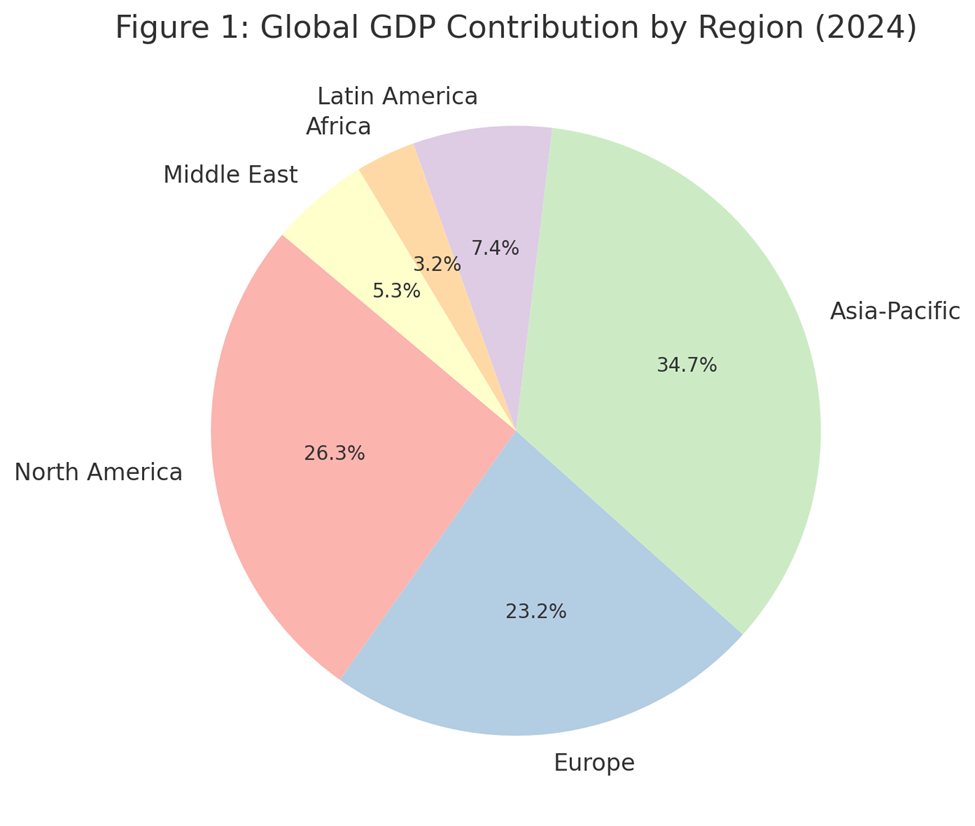
Figure 1
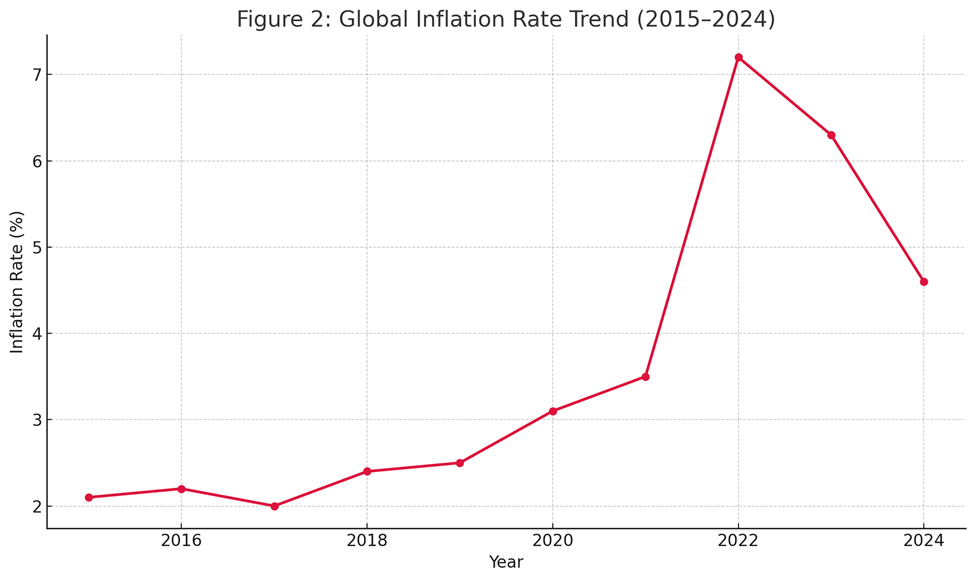
Figure 2