
Duodenal Perforation in an Infant with Rotavirus Gastroenteritis
Duodenal Perforation in an Infant with Rotavirus Gastroenteritis
Aman Siloiya1, Shyamendra Pratap Sharma2, Ajay Jawahar MBBS MS FACS1*
1. Department Of General Surgery, Dr. KNS Memorial Institute of Medical Sciences, Barabanki (Formerly Known As Mayo Institute Of Medical Sciences), Barabanki, Uttar Pradesh, India.
2. Department Of General Surgery, Dr. KNS Memorial Institute of Medical Sciences , Barabanki (Formerly Known As Mayo Institute Of Medical Sciences), Barabanki, Uttar Pradesh, India.
*Correspondence to: Ajay Jawahar MBBS MS FACS; Department Of General Surgery, Dr. KNS Memorial Institute of Medical Sciences, Barabanki (Formerly Known As Mayo Institute Of Medical Sciences), Barabanki, Uttar Pradesh, India.
Copyright
© 2025 Ajay Jawahar, This is an open access article distributed under the Creative Commons Attribution License, which permits unrestricted use, distribution, and reproduction in any medium, provided the original work is properly cited.
Received: 20 February 2025
Published: 19 June 2025
Abstract
Reports of intestinal perforations associated with gastroenteritis are few and even rarer for rotavirus related infections. Rotavirus, a common cause of acute gastroenteritis in childhood, is usually a benign and self limiting disease but very rarely can produce perforation which we report here in a 1- Year old infant.
Keywords: Duodenal perforation; duodenal perforation in an infant; duodenal perforation in an infant with rotavirus; duodenal perforation in an infant with rotavirus gastroenteritis; rotavirus gastroenteritis; gastroenteritis; rotavirus; perforation.
Duodenal Perforation in an Infant with Rotavirus Gastroenteritis
Background
Gastrointestinal perforations are rare in the paediatric population and are mainly observed in sick preterm infants or in older children receiving intensive care[1]. Reports on intestinal perforations associated with gastroenteritis are few and are missing on rotavirus related infections. Rotavirus is a common cause of acute gastroenteritis in childhood[2]. It is usually a benign and self limiting disease. However, worldwide it is estimated that rotavirus infections are responsible for half a million annual deaths in children, primarily related to acute severe dehydration. Rotavirus related deaths are also reported in European and Asian countries, most frequently among infants[3] and in neonates with rotavirus associated necrotizing enterocolitis. [4,5]
Case Presentation
A previously healthy 1-year-old male baby was admitted with clinical signs of severe dehydration after 3 days of diarrhea, vomiting and fever. Upon admission he was lethargic and had clinical signs of shock with cold extremities, a prolonged capillary refill time (>3s) and tachycardia and abdominal distention. He was managed conservatively and advised X ray abdomen supine [Figure 1] which showed post diarrhoeal paralytic ileus with dilated bowel loops. Ultrasonography showed only mild fluid collection with internal septations. A plain abdominal x ray (erect) revealed free sub-diaphragmatic air [figure 2]. Suspecting intestinal perforation we decided to perform an exploratory laparotomy which revealed a small post-pyloric duodenal perforation [Figure 4]. Grahams patch repair was performed [Figure 5]. The postoperative course was uneventful [Figure 3]. Rotavirus antigen was found in feces.
Figure 1 X Ray Abdomen Supine Done On Day Of Admission 1 Showing Dilated Bowel Loops 
Figure 2 Right Sided Sub Diaphragmatic Air Fluid Level
Figure 3 : X Ray Abdomen Erect Done Post Operatively Normal X ray Abdomen With Drains In Situ 
Figure 4 Intra Operative: Showing small postpyloric Doudenal Perforation
Figure 5 Graham’s Patch Repair Done
Discussion
A gastrointestinal perforation associated with acute diarrhoeal disease in children is very rare. We conducted a structured literature search in pubmed and found only five cases reporting a similar clinical picture as in presented patient [ table 1] , all with duodenal perforation site and haematemesis and one additional paediatric case with rotavirus-assocaited gastric rupture. [6-7] None of the cases with duodenal perforation were diagnosed with a rotavirus infection. We urge clinicians to consider gastrointestinal perforation as a potentially severe complication in children with acute gastroenteritis, dehydration and in particular if the abdomen is distended even in the absence of haematemesis. A plain abdominal x ray may reveal pneumoperitoneum and guide appropriate treatment.
|
Table 1 Previous Paediatric Reports On Gastrointestinal Perforations Associated With Acute Diarrhoeal Disease |
|||||||
|
Author |
Sex |
Age |
Medical History |
Acute Symptoms Of Gastroenteritis |
Dehydration |
Haematemesis |
Site Of Perforation |
|
Johnstone[6] |
Boy |
1 year |
Healthy |
Loose Stools And Vomiting |
+ |
ND |
Duodenal |
|
Tan et al[9] |
Girl |
3 year |
Aqueductal Stenosis |
Diarrhoea And Vomiting |
+ |
+ |
Duodenal |
|
Wilson et al[10] |
Boy |
7 Year |
Neurologically Disabled |
Diarrhoea And Vomiting |
+ |
+ |
Duodenal |
|
Lee et al[7] |
Boy |
3 Months |
Healthy |
Diarrhoea |
ND |
+ |
Duodenal |
|
Shimizu et al[8] |
Girl |
3 Months |
Hypothyroidism |
Vomiting |
+ |
- |
Gastric |
Conclusion
Gastrointestinal perforation in infants and children with rotavirus is rare, but a severe and potentially lethal complication. Awareness of this complication in children with severe gastroenteritis is important for timely and appropriate treatment.
Conflict of interest statement/funding: No author has any conflict of interest of any kind for the submission. No funding has been received for the work submitted.
Authors Contribution:
- Dr Shyamendra Pratap Sharma Operating surgeon and clinician taking care of the patient.
- Dr Aman Siloiya , Resident under the Operating surgeon involved in patient care and preparing the manuscript.
- Dr Ajay Jawahar, conceiving , editing the manuscript.
Reference
1- Grosfeld JL, Molinari F, Rescorla FJ, et al. Gastrointestinal Perforation and peritonitis in infants and children: experience with 179 cases over ten years. Surgery 1996;120:650-5
2- Parashar UD, Hummelman EG, Glass RI, et al. Global illness and deaths caused by rotavirus disease in children. Emerg Infect Dis 2003;9:565-72.
3- Koch J, Wiese-Posselt M. Epidemiology of rotavirus infections in children less than 5 years of age: Germany, 2001-2008. Pediatr Infect Dis J 2011;30:112-17
4- Rotbart HA, Nelson WL, Yolken RH, et al. Neonatal Rotavirus associated necrotizing enterocolitis: case control study and prospective surveillance during an outbreak. J Pediatr 1988;112:87-93
5- Shai S, Perez-Becker R, Forster J, et al. Rotavirus disease in germany—a prospective survey of very severe cases. Pediatr Infect Dis J 2013;32:e62-7
6- Johnstone JM, Rintoul RF. Perforated Duodenal Ulcer in childhood. Br J Surg 1972;59:288-9
7- Lee NM, Yun SW, Kwak BK, et al. Perforated Duodenal Ulcer presenting with massive hematochezia in a 30 month old child. World J Gastroenterol
8- Shimizu T, Horiuchi T, Tamai H et al. Idiopathic gastric rupture in a 3 month old girl. Acta Paediatr 2003;92:628-30
9- Tan SH, Joseph VT, Wong HB. Perforated chronic duodenal ulcer in children. Singapore Med J 1984;25:187–9.
10- Wilson JM, Darby CR. Perforated duodenal ulcer: an unusual complication of gastroenteritis. Arch Dis Child 1990;65:990–1.
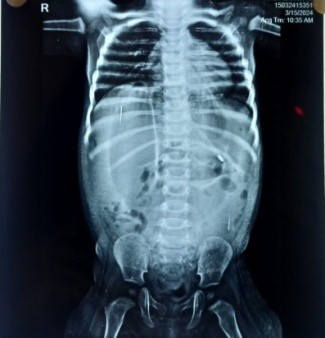
Figure 1
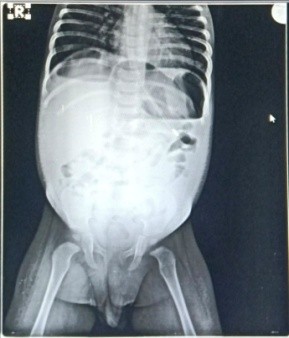
Figure 2
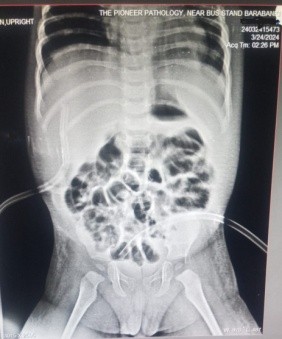
Figure 3
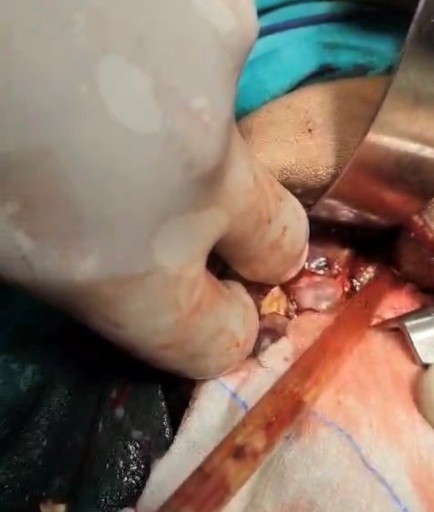
Figure 4
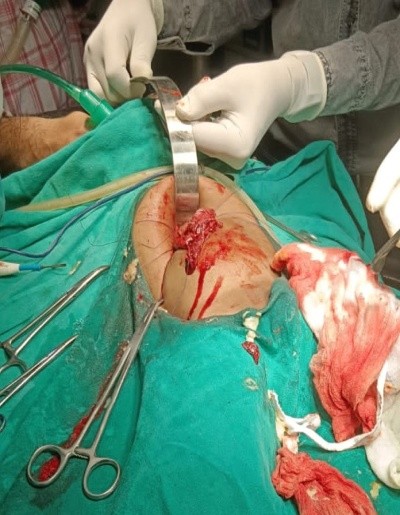
Figure 5